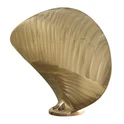
As a supplier of folding props for sailboats, I've been asked countless times: Do folding props for sailboats work well in rough seas? This is a question that cuts to the heart of every sailor's concerns, especially those who navigate challenging waters. In this blog, I'll share my insights based on years of experience in the industry and the scientific principles behind these remarkable pieces of marine equipment.
Understanding Folding Props for Sailboats
Before delving into their performance in rough seas, it's essential to understand what folding props are and how they work. Folding props are designed to minimize drag when the sailboat is under sail. When the engine is off, the propeller blades fold flat against the hub, reducing the surface area exposed to the water. This not only improves the boat's sailing performance but also reduces noise and vibration.
When the engine is engaged, the blades open up to provide thrust, just like a traditional fixed propeller. The key advantage of folding props is their ability to adapt to different operating conditions, making them a popular choice among sailors who value both speed and efficiency.
The Challenges of Rough Seas
Rough seas present a unique set of challenges for any sailboat and its propulsion system. High waves, strong currents, and unpredictable wind conditions can put a significant strain on the boat and its components. In such conditions, the propeller must be able to provide reliable thrust while also withstanding the forces exerted by the water.
One of the primary concerns in rough seas is the risk of cavitation. Cavitation occurs when the pressure around the propeller blades drops below the vapor pressure of the water, causing bubbles to form. These bubbles can collapse violently, leading to damage to the propeller blades and a loss of thrust.
Another challenge is the increased drag caused by the rough water surface. The propeller must work harder to overcome this drag, which can reduce its efficiency and increase fuel consumption.
How Folding Props Perform in Rough Seas
Despite these challenges, folding props for sailboats can perform remarkably well in rough seas. Here's why:
Reduced Drag
As mentioned earlier, folding props are designed to minimize drag when the boat is under sail. This same feature can also be beneficial in rough seas. By reducing the surface area exposed to the water, folding props can help the boat cut through the waves more efficiently, reducing the overall drag and improving fuel efficiency.
Improved Maneuverability
In rough seas, maneuverability is crucial. Folding props offer better maneuverability compared to fixed props, as they can quickly change direction and adjust their thrust. This can be especially useful when navigating through tight spaces or avoiding obstacles in rough water.


Resistance to Cavitation
Folding props are typically designed with a more streamlined shape and a larger blade area, which can help reduce the risk of cavitation. The larger blade area allows the propeller to distribute the load more evenly, reducing the pressure on individual blades and minimizing the formation of bubbles.
Durability
Modern folding props are made from high-quality materials that are designed to withstand the harsh conditions of the marine environment. They are built to be strong and durable, able to resist the impact of waves and debris in rough seas.
Real-World Examples
To illustrate the performance of folding props in rough seas, let's take a look at some real-world examples. Many sailors who have switched to folding props have reported significant improvements in their boat's performance in challenging conditions.
One sailor, John, shared his experience of sailing through a severe storm in the Atlantic Ocean. He had recently installed a Feathering Prop Sailboat on his sailboat and was initially skeptical about its performance in such rough seas. However, he was pleasantly surprised by how well the propeller performed. Despite the high waves and strong winds, the propeller provided reliable thrust and helped him maintain control of the boat. He also noticed a significant reduction in fuel consumption compared to his previous fixed propeller.
Another sailor, Sarah, participated in a long-distance race that took her through some of the roughest waters in the Pacific Ocean. She chose to use a Titan Series Propeller on her sailboat, and it proved to be a game-changer. The propeller's ability to adapt to different conditions allowed her to maintain a consistent speed and stay ahead of the competition. She also appreciated the propeller's durability, as it withstood the impact of large waves and debris without any damage.
Factors to Consider
While folding props can perform well in rough seas, there are several factors to consider when choosing the right propeller for your sailboat.
Boat Size and Type
The size and type of your sailboat will play a significant role in determining the appropriate propeller size and design. Larger boats may require a larger propeller with a higher blade area to provide sufficient thrust, while smaller boats may benefit from a more compact and lightweight propeller.
Engine Power
The power of your boat's engine is another important factor to consider. A more powerful engine may require a propeller with a higher pitch to maximize its efficiency, while a less powerful engine may need a propeller with a lower pitch to avoid overloading.
Sailing Conditions
The type of sailing conditions you typically encounter will also influence your propeller choice. If you frequently sail in rough seas, you may want to choose a propeller that is specifically designed for these conditions, such as the HydroSilence CruiseProp Propeller. This propeller is designed to reduce noise and vibration, making it ideal for long-distance cruising in challenging waters.
Conclusion
In conclusion, folding props for sailboats can work very well in rough seas. Their ability to reduce drag, improve maneuverability, resist cavitation, and withstand the forces of the water make them a reliable choice for sailors who navigate challenging waters.
However, it's important to choose the right propeller for your boat and sailing conditions. By considering factors such as boat size, engine power, and sailing conditions, you can ensure that your folding propeller provides optimal performance and reliability in rough seas.
If you're interested in learning more about folding props for sailboats or are considering purchasing one for your own boat, I encourage you to contact me. I'd be happy to discuss your specific needs and help you find the perfect propeller for your sailing adventures.
References
- "Marine Propellers and Propulsion" by John Carlton
- "The Physics of Sailing" by Bryon D. Anderson
- "Sailboat Propulsion Systems" by David Gerr