


Boat Propeller Used
Zhejiang Yuan Ding Marine Equipment Co., Ltd., with over two decades of dedicated history, has been singularly focused on one thing: crafting high-quality marine propellers. Since our inception, we have been committed to delivering exceptional Fixed Pitch Propellers (FPP) and Controllable Pitch Propellers (CPP) to meet the diverse needs of our global clientele.


Product Categories



Why Choose Us
Our Factory
With a team of 130 dedicated professionals, our 16,000 square meter workshop annually produces 2,000 tons of copper alloy propellers, committed to providing efficient and reliable marine propulsion solutions.
Custom Service
With our advanced casting process, Yuan Ding Marine delivers fully customized propellers, whether you need one unique design or consistent quality across a large batch.
24/7 Customer Support
Our round-the-clock customer support ensures quick responses to inquiries, from initial consultations to after-sales services. We're here whenever you need us.

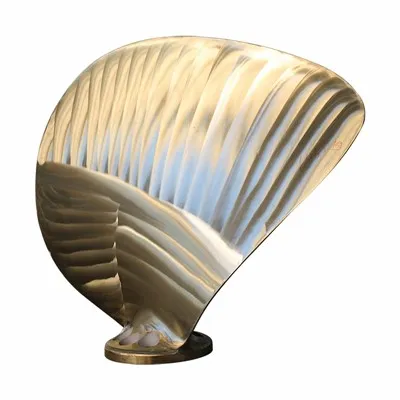
There are several types of boat propellers. Fixed - pitch propellers are simple and cost - effective, suitable for many common boats. Controllable - pitch propellers allow for better maneuverability by adjusting the blade pitch. Duct propellers are often used in some workboats to improve efficiency. Multi - blade propellers, like those with five or more blades, are found on large ships for greater thrust.
Advantages of boat propeller used
Efficient propulsion
Propellers are designed to convert the rotational energy of the engine into forward thrust efficiently. They push water backward, creating an equal and opposite force that drives the boat forward, enabling the boat to move through the water with relatively low energy consumption.
Controllable speed and direction
By adjusting the engine's RPM and, in the case of some propellers, the pitch of the blades, the speed and direction of the boat can be precisely controlled. This allows the operator to navigate the boat accurately, whether cruising at a constant speed, accelerating, decelerating, or making turns.


Versatility
Different types of propellers are available to suit various boat sizes, types, and operating conditions. For example, small outboard motors use simple two - or three - blade propellers, while large commercial ships may employ complex multi - blade or controllable - pitch propellers. This versatility ensures that there is a suitable propeller for almost any boating application.
Reliability
Modern boat propellers are typically made from durable materials such as stainless steel or high - strength composites, which can withstand the harsh marine environment and the forces exerted during operation. With proper maintenance, they can provide reliable service for many years.

Product Specification
|
Model NO. |
Used outboard propellers |
|
Function |
Adjustable blades for Sailboat |
|
Classification Society |
DNV/ABS/CCS/RS/RINA/LR/BV/KR etc. |
|
Certification system |
ISO9001\ISO14001\ISO45001 |
|
Diameter |
Customized |
|
Number of blades |
Customized, normally for 4 blades |
|
Material |
Ni-AI Bronze (Cu3) |
|
Applications |
Used Outboard Boats/Recreational Boats etc. |
The propeller diameter simply measures the distance from the blade tip to the tip. Propellers with larger diameters produce more thrust, improve slow-speed maneuvering and reverse handling, and they also have greater resistance to drag.
You may see one, two, four, five, or six blade propellers depending on what type of boat you are talking about. A larger number of blades can mean more power, better balance, which in turn means less vibration and drag. Two blades are not common on low-power boats. Three blades are the most common. For boats with more power, four-blade propellers might be useful. This is because they can climb on plane at a lower speed. Propellers with more blades are usually only used on large yachts and boats.

Principles of Ship Propulsion
A ship moves through the water through propelling devices , such as paddle wheels or propellers. These devices impart velocity to a column of water and move s it in the opposite direction in which it is desired to move the ship. A force, called reactive force because it reacts to the force of the column of water, is developed against the velocity-imparting device. This force, also called thrust, is transmitted to the ship and causes the ship to move through the water.
The screw-type propeller is the propulsion device used in almost all naval ships . The thrust developed on the propeller is transmitted to the ship's structure by the main shaft through the thrust bearing. The main shaft extends from the main reduction gear shaft of the reduction gear to the propeller. It is supported and held in alignment by the spring bearings, the stern tube bearings, and the strut bearing. The thrust, acting on the propulsion shaft as a result of the pushing effect of the propeller, is transmitted to the ship's structure by the main thrust bearing. In most ships, the main thrust bearing is located at the forward end of the main shaft within the main reduction gear casing. In some very large ships, however, the main shaft thrust bearing is located farther aft in a machinery space or a shaft alley.
The main reduction gear connects the prime mover (engine) to the shaft. The function of the main reduction gear is to reduce the high rotational speeds of the engine and allow the propeller to operate at lower rotation speeds. In this way, both the engine and the propeller shaft rotate at their most efficient speeds.
FAQ
We're professional navy ship propeller manufacturers and suppliers in China. If you're going to buy high quality navy ship propeller, welcome to get quotation from our factory. Also, custom service is available.
navy ship propeller, Military Shipbuilding Propellers, 4 M Propeller for Navy Ship