


In the realm of marine engineering, the propeller stands as a cornerstone of a vessel's propulsion system. As a dedicated Marine Propeller supplier, I've witnessed firsthand the profound impact that the pitch of a marine propeller can have on boat speed. In this blog, we'll delve into the intricate relationship between propeller pitch and boat speed, exploring the science behind it and how it affects the performance of various vessels.
Understanding Propeller Pitch
Before we discuss its impact on boat speed, let's first understand what propeller pitch is. In simple terms, propeller pitch refers to the theoretical distance a propeller would move forward in one complete revolution if it were moving through a solid medium without any slippage. It is typically measured in inches and can be thought of as the "bite" that the propeller takes out of the water with each turn.
There are two main types of propeller pitch: fixed pitch and controllable pitch. Fixed pitch propellers have a set pitch angle that cannot be adjusted once the propeller is manufactured. On the other hand, controllable pitch propellers (CPP) allow the pitch angle to be changed while the propeller is in operation, providing greater flexibility in different operating conditions.
The Science Behind Propeller Pitch and Boat Speed
The relationship between propeller pitch and boat speed is governed by several physical principles. When a propeller rotates, it creates a thrust force that propels the boat forward. The magnitude of this thrust force is influenced by the pitch of the propeller, among other factors such as the propeller's diameter, blade shape, and the rotational speed of the engine.
A propeller with a higher pitch will cover a greater distance in one revolution compared to a propeller with a lower pitch. This means that, in theory, a higher pitch propeller should result in a higher boat speed. However, the actual boat speed is also affected by the engine's power and the resistance encountered by the boat in the water.
If the pitch of the propeller is too high for the engine's power, the engine will struggle to turn the propeller at an optimal speed, resulting in reduced efficiency and potentially lower boat speed. Conversely, if the pitch is too low, the engine may be able to turn the propeller at a high speed, but the propeller may not generate enough thrust to move the boat efficiently, also leading to suboptimal performance.
Factors Affecting the Ideal Propeller Pitch
Determining the ideal propeller pitch for a particular boat involves considering several factors:
Boat Type and Size
Different types of boats have different requirements when it comes to propeller pitch. For example, a small fishing boat may require a lower pitch propeller to achieve good acceleration and maneuverability, while a large cruise ship may need a higher pitch propeller to reach its maximum cruising speed.
The size of the boat also plays a role. Larger boats generally require propellers with larger diameters and higher pitches to generate enough thrust to move the heavy vessel through the water.
Engine Power and RPM
The power output and rotational speed (RPM) of the engine are crucial factors in selecting the right propeller pitch. The propeller must be matched to the engine's power curve to ensure that the engine operates within its optimal RPM range. This will not only result in better boat speed but also improve fuel efficiency and reduce engine wear.
Operating Conditions
The operating conditions, such as water depth, sea state, and the presence of currents, can also affect the ideal propeller pitch. In shallow water, a lower pitch propeller may be preferred to prevent the propeller from hitting the bottom. In rough seas, a propeller with a slightly lower pitch may provide better performance by allowing the engine to maintain a more consistent RPM.
Impact of Propeller Pitch on Different Types of Vessels
Fishing Boats
Fishing boats often require a propeller that can provide good acceleration and maneuverability. A lower pitch propeller is typically used to allow the boat to quickly get up to speed and change directions easily. This is especially important when fishing in areas with a lot of obstacles or when chasing after fish.
Cruise Ships
Cruise ships are designed for long-distance travel at a relatively high speed. They require propellers with a higher pitch to generate enough thrust to move the large vessel through the water efficiently. 5 Meter Cruise Ship Propeller is an example of a propeller that is specifically designed for large cruise ships, with a carefully engineered pitch to optimize speed and fuel efficiency.
Wind Turbine Installation Vessels
Wind turbine installation vessels operate in a unique environment, often requiring precise positioning and the ability to carry heavy loads. These vessels typically use Wind Turbine Installation Vessel Propeller with a controllable pitch system. The ability to adjust the pitch allows the vessel to adapt to different operating conditions, such as when moving between installation sites and when performing the delicate task of installing wind turbines.
The Role of Advanced Propeller Designs
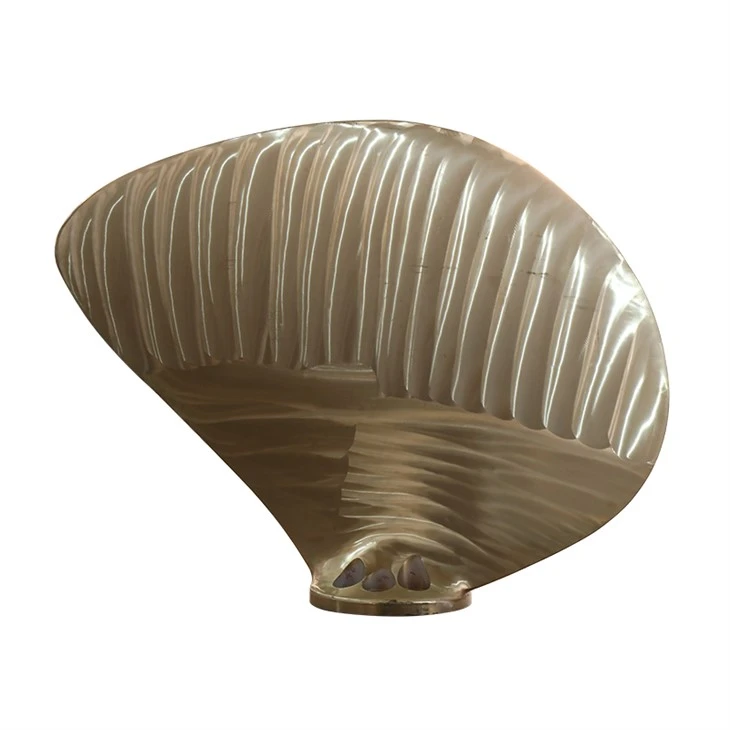
In recent years, there have been significant advancements in propeller design, aimed at improving the efficiency and performance of marine vessels. One such example is the SeaLuxe Eco-Thrust Propeller, which combines innovative blade shapes and materials to optimize the pitch and thrust characteristics.
These advanced propellers are designed to reduce cavitation, which is the formation of bubbles in the water around the propeller blades. Cavitation can not only reduce the efficiency of the propeller but also cause damage to the blades over time. By minimizing cavitation, advanced propellers can improve boat speed and reduce maintenance costs.
Conclusion
The pitch of a marine propeller is a critical factor that significantly impacts boat speed. By understanding the relationship between propeller pitch and boat speed, as well as the various factors that affect the ideal pitch, boat owners and operators can make informed decisions when selecting a propeller for their vessel.
As a Marine Propeller supplier, we are committed to providing high-quality propellers that are tailored to the specific needs of each customer. Whether you are in the market for a propeller for a fishing boat, a cruise ship, or a wind turbine installation vessel, we have the expertise and experience to help you find the right solution.

If you are interested in learning more about our propellers or would like to discuss your specific requirements, please don't hesitate to contact us. We look forward to the opportunity to work with you and help you optimize the performance of your vessel.
References
- Carlton, J. S. (2007). Marine Propellers and Propulsion. Butterworth-Heinemann.
- Lewis, E. V. (Ed.). (1988). Principles of Naval Architecture. Society of Naval Architects and Marine Engineers.
- McCormick, B. W. (1969). Hydrodynamics of Ship Propulsion. Dover Publications.


