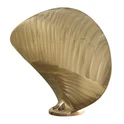
As a seasoned supplier of superyacht propellers, I've witnessed firsthand the profound impact that the type of water - fresh or salt - can have on these crucial marine components. In this blog, I'll delve into the scientific aspects of how different water types affect superyacht propellers, drawing on my years of experience in the industry.
Density and Buoyancy
One of the most fundamental differences between fresh and saltwater is their density. Saltwater is denser than freshwater due to the dissolved salts it contains. The density of freshwater is approximately 1000 kg/m³, while that of saltwater can range from 1020 to 1030 kg/m³, depending on the salinity.
This difference in density has a direct impact on the buoyancy of the superyacht and, consequently, the performance of the propeller. A superyacht floating in saltwater will experience greater buoyancy compared to when it's in freshwater. This means that the propeller doesn't have to work as hard to keep the yacht afloat, allowing it to operate more efficiently.
In saltwater, the increased density also affects the way the propeller interacts with the water. The propeller blades displace a larger mass of water per revolution in saltwater than in freshwater. This results in a greater thrust force being generated for the same amount of power input. As a result, a superyacht can achieve higher speeds with less engine power when operating in saltwater.
Corrosion and Erosion
Another significant factor influenced by the type of water is corrosion and erosion of the propeller. Saltwater is a highly corrosive environment due to the presence of dissolved salts, particularly sodium chloride. These salts can cause electrochemical reactions on the surface of the propeller, leading to the formation of rust and other corrosion products.
Over time, corrosion can weaken the structural integrity of the propeller, reducing its efficiency and lifespan. In addition to corrosion, saltwater can also cause erosion of the propeller blades. The abrasive action of the salt particles in the water can wear down the surface of the blades, altering their shape and reducing their performance.
On the other hand, freshwater is generally less corrosive than saltwater. However, it can still contain dissolved minerals and gases that can cause corrosion, especially if the water is acidic or has a high oxygen content. In freshwater environments, propellers may be more susceptible to pitting corrosion, which can lead to small holes forming on the surface of the blades.
To mitigate the effects of corrosion and erosion, we offer a range of high - quality propellers made from corrosion - resistant materials such as stainless steel, bronze, and nickel - aluminum - bronze. These materials are specifically chosen for their ability to withstand the harsh conditions of both fresh and saltwater environments.
Cavitation
Cavitation is a phenomenon that occurs when the pressure around the propeller blades drops below the vapor pressure of the water, causing the formation of vapor bubbles. When these bubbles collapse, they can cause significant damage to the propeller blades, leading to pitting, erosion, and reduced performance.
The likelihood of cavitation occurring is influenced by several factors, including the speed of the propeller, the shape of the blades, and the density of the water. In saltwater, the higher density can help to suppress cavitation to some extent. The increased mass of water around the propeller blades provides more resistance to the formation and collapse of vapor bubbles.
In freshwater, however, the lower density means that cavitation can occur more easily. This is particularly true at high speeds or when the propeller is operating under heavy loads. To prevent cavitation, our propellers are designed with advanced blade geometries and optimized pitch ratios. These features help to maintain a more uniform pressure distribution around the blades, reducing the likelihood of cavitation.
Maintenance and Inspection
Regardless of whether a superyacht is operating in fresh or saltwater, regular maintenance and inspection of the propeller are essential. In saltwater environments, more frequent inspections are recommended due to the increased risk of corrosion and erosion. The propeller should be inspected for signs of rust, pitting, and damage to the blades.
In freshwater, while the corrosion risk is lower, it's still important to check for any signs of wear or damage. The propeller should also be cleaned regularly to remove any debris or algae that may have accumulated on the blades.
As a superyacht propeller supplier, we offer comprehensive maintenance and inspection services to ensure that our customers' propellers are in optimal condition. Our team of experts can perform detailed inspections, including non - destructive testing, to detect any potential issues before they become major problems.
Impact on Propeller Design
The differences in the behavior of fresh and saltwater have a significant impact on propeller design. When designing a propeller for a superyacht, engineers must take into account the primary operating environment of the vessel.


For yachts that primarily operate in saltwater, propellers can be designed with a slightly smaller diameter and a higher pitch to take advantage of the increased density and thrust. This allows the yacht to achieve higher speeds with less power. In contrast, propellers for yachts operating in freshwater may need to have a larger diameter and a lower pitch to compensate for the lower density and generate sufficient thrust.
We offer a wide range of propeller designs to suit different operating conditions. Our Combined Transportation Ship Propeller is designed for versatility, suitable for both fresh and saltwater environments. Our Luxury Yacht Propeller is specifically engineered for high - performance superyachts, with advanced features to optimize performance in saltwater. And our Ore Carrier Propeller is designed for heavy - duty applications, capable of withstanding the harsh conditions of both types of water.
Conclusion
In conclusion, the type of water - fresh or salt - has a profound impact on the performance, durability, and design of superyacht propellers. The differences in density, corrosion potential, cavitation risk, and maintenance requirements must be carefully considered when selecting and operating a propeller.
As a leading superyacht propeller supplier, we understand the unique challenges posed by different water types. Our expertise in propeller design, materials selection, and maintenance ensures that our customers receive high - quality propellers that are optimized for their specific operating conditions.
If you're in the market for a superyacht propeller or need advice on propeller maintenance and performance, we'd love to hear from you. Contact us today to discuss your requirements and let us help you find the perfect propeller for your superyacht.
References
- Burcher, R. and Rydill, M., “Ship Resistance and Propulsion: Practical Prediction Methods”, Butterworth - Heinemann, 1994.
- Carlton, J.S., “Marine Propellers and Propulsion”, Elsevier, 2012.
- Lewis, E.V., “Principles of Naval Architecture”, Society of Naval Architects and Marine Engineers, 1988.