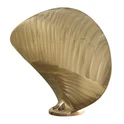
Hey there! As a supplier of Tug Boat Props, I often get asked about how to measure a tug boat prop. It's not as complicated as it might seem at first glance, but there are definitely some key steps and details you need to know. In this blog, I'll walk you through the whole process.
First off, let's talk about why measuring a tug boat prop is so important. A properly measured prop ensures that your tug boat operates at its best. It affects the boat's speed, fuel efficiency, and overall performance. If the prop isn't the right size or shape, you could end up with a boat that's sluggish, guzzles fuel, and just doesn't do what you need it to do.
The first thing you'll need to measure is the diameter of the prop. The diameter is the distance from the tip of one blade to the tip of the blade directly across from it. To measure this, you can use a large caliper or a measuring tape. Make sure you measure across the center of the prop hub. This measurement is crucial because it determines how much water the prop can move with each revolution. A larger diameter prop generally means more power, but it also requires more engine power to turn.


Next up is the pitch. The pitch of a prop is the distance the prop would move forward in one revolution if it were moving through a solid medium. It's a bit like the threads on a screw. To measure the pitch, you can use a pitch gauge. There are different types of pitch gauges available, but they all work on the same principle. You place the gauge on the blade and it measures the angle of the blade, which is then used to calculate the pitch. The pitch affects the speed and torque of the boat. A higher pitch prop will give you more speed, but less torque, while a lower pitch prop will give you more torque but less speed.
Another important measurement is the blade area. The blade area is the total surface area of all the prop blades. You can calculate this by measuring the length and width of each blade and then using a formula to find the area. The blade area affects how much thrust the prop can generate. A larger blade area means more thrust, but it also increases the drag on the prop.
Now, let's talk about the number of blades. Tug boat props can have anywhere from two to six blades. The number of blades affects the performance of the prop in different ways. A prop with more blades generally provides smoother operation and less vibration, but it also has more drag. A prop with fewer blades is more efficient, but it can be noisier and cause more vibration. You'll need to consider your specific needs when choosing the number of blades for your tug boat.
When measuring a tug boat prop, it's also important to check for any damage or wear. Look for cracks, chips, or bent blades. These issues can affect the performance of the prop and even cause damage to the engine. If you notice any damage, it's best to have the prop repaired or replaced as soon as possible.
As a Tug Boat Prop supplier, I've seen all kinds of props, and I know how important it is to get these measurements right. We also offer a wide range of props for different types of boats, including Drilling Rig Ship Propeller, Turbot Fishing Vessel Propeller, and Drilling Platform Vessel Propeller.
If you're in the market for a new tug boat prop or need help measuring your existing prop, don't hesitate to reach out. We're here to help you find the perfect prop for your boat. Whether you're a commercial tug boat operator or a recreational boater, we have the expertise and the products to meet your needs.
In conclusion, measuring a tug boat prop is a crucial step in ensuring the performance and efficiency of your boat. By following these steps and taking accurate measurements, you can choose the right prop for your needs. And if you need any assistance or have any questions, we're just a message away. So, go ahead and measure your prop today, and let's get your boat running at its best!
References:
- General knowledge and experience in the tug boat prop industry.