


What is the noise level generated by a container ship propeller?
As a seasoned supplier of Container Ship Propellers, I've witnessed firsthand the constant evolution and technological advancements in the maritime industry. Among the many concerns and considerations in ship design and operation, the noise level generated by a container ship propeller is a topic that has gained significant attention in recent years. This is not only due to environmental and regulatory reasons but also for the well - being of marine life and the crew on board.
Understanding the Basics of Propeller Noise
Propeller noise is a complex phenomenon that results from a combination of different mechanisms. When a container ship propeller rotates in water, it interacts with the fluid in numerous ways, producing various types of noise. The two main categories of propeller noise are hydrodynamic noise and mechanical noise.
Hydrodynamic noise is primarily caused by the interaction between the propeller and the water flow. As the propeller blades push through the water, they create pressure variations. These fluctuations can lead to the formation of air bubbles, a process known as cavitation. Cavitation is a major source of high - intensity noise. When the bubbles collapse, they generate shock waves that propagate through the water. The frequency and intensity of this noise depend on a variety of factors, including the propeller's rotational speed, blade shape, and the density and flow characteristics of the water.
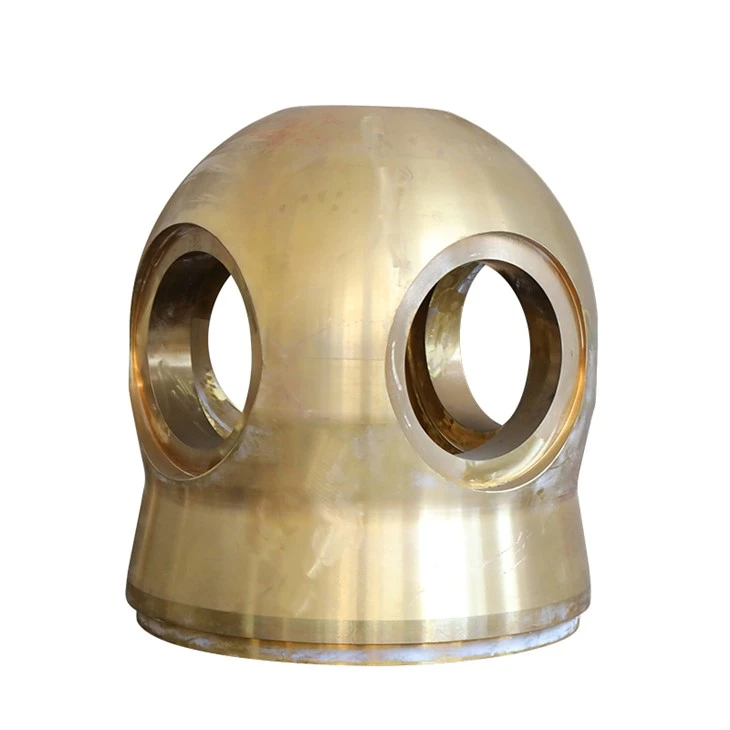

Mechanical noise, on the other hand, is related to the physical components of the propeller system. It can originate from the vibration of the propeller shaft, the bearings, and other moving parts. Imperfections in the manufacturing process, misalignment, or wear and tear can all contribute to increased mechanical noise. For instance, if there is a slight imbalance in the propeller, it will cause uneven forces during rotation, leading to vibrations that are transmitted as noise.
Measuring the Noise Level
The noise level generated by a container ship propeller is typically measured in decibels (dB). However, just stating the dB value doesn't provide a complete picture because the frequency of the noise also plays a crucial role. In the marine environment, the audible frequency range of interest is usually from about 10 Hz to 100 kHz. Lower - frequency noise (below 1 kHz) can travel long distances in water and has the potential to affect a large area, while higher - frequency noise (above 10 kHz) is more easily absorbed by the water but can still have a significant impact on nearby marine life and the ship's acoustic detection systems.
Modern measurement techniques involve the use of hydrophones, which are underwater microphones. These hydrophones are strategically placed around the propeller or at different locations in the water to capture the noise at various distances and angles. The data collected is then analyzed to determine the noise spectrum, which shows how the noise energy is distributed across different frequencies.
Factors Affecting Propeller Noise Level
Several factors can influence the noise level generated by a container ship propeller. One of the most significant factors is the propeller's design. Propellers with a well - optimized blade shape can reduce the likelihood of cavitation and, therefore, lower the noise level. For example, a propeller with a large blade area and a smooth, streamlined shape can distribute the load more evenly across the blades, minimizing pressure fluctuations and bubble formation.
The rotational speed of the propeller also has a direct impact on noise. Generally, higher rotational speeds lead to increased noise levels, as the rate of water flow and pressure changes is more rapid. Additionally, the load on the propeller, which is related to the ship's speed and the resistance it encounters in the water, can affect noise. A heavily loaded propeller is more likely to experience cavitation and generate more noise.
The condition of the propeller is another important factor. Over time, propellers can become damaged or corroded, which can disrupt the smooth flow of water around the blades and increase noise. Regular maintenance and inspection of the propeller are essential to ensure optimal performance and minimize noise.
Implications of Propeller Noise
The noise generated by container ship propellers has several implications. From an environmental perspective, it can have a detrimental effect on marine life. Many marine animals, such as whales, dolphins, and fish, rely on sound for communication, navigation, and hunting. High - intensity propeller noise can interfere with these vital functions, causing stress, disorientation, and even physical harm. It can disrupt their migration patterns, feeding habits, and reproductive behavior.
For the crew on board the ship, excessive noise can also be a problem. Prolonged exposure to high - level noise can lead to hearing loss and other health issues. It can also affect the crew's ability to communicate effectively, which is crucial for the safe operation of the ship.
In addition, from a regulatory standpoint, there are increasing requirements to limit the noise emissions from ships. International and national regulations are being developed to protect the marine environment and ensure the well - being of marine life. Shipowners and operators need to comply with these regulations, which often means investing in quieter propeller technologies.
Our Solutions as a Container Ship Propeller Supplier
At our company, we are committed to developing and supplying propellers that meet the highest standards of performance and noise reduction. We use advanced design and manufacturing techniques to optimize the propeller's shape and performance. Our engineers conduct extensive computational fluid dynamics (CFD) simulations to analyze the water flow around the propeller and predict the noise levels. This allows us to make adjustments to the design and minimize cavitation and noise.
We also offer a range of propellers for different types of ships. For example, our Multipurpose Cargo Ship Propeller is designed to provide efficient propulsion with reduced noise for multipurpose cargo vessels. Our Corvette Propeller is suitable for military vessels, where low - noise operation is often a critical requirement. And our Electro - propelled Lighted Purse Seiner Propeller is tailored for fishing boats, taking into account their specific operational needs and noise concerns.
Contact Us for Propeller Solutions
If you are in the market for high - quality, low - noise container ship propellers or other types of ship propellers, we invite you to contact us for a detailed discussion. Our team of experts is ready to provide you with customized solutions based on your specific requirements. Whether you are a shipbuilder, shipowner, or operator, we can offer the right propeller to meet your needs and help you comply with environmental regulations.
References
- "Principles of Naval Architecture" by the Society of Naval Architects and Marine Engineers.
- "Underwater Acoustics" by Thomas G. Leighton.
- "Marine Propellers and Propulsion" by John Carlton.


