


The wake of a marine propeller is a complex and fascinating phenomenon that plays a crucial role in the performance and efficiency of a ship. As a leading Marine Propeller supplier, we understand the importance of this concept and its impact on the overall operation of marine vessels. In this blog, we will delve into the details of what the wake of a marine propeller is, its characteristics, and its significance in the maritime industry.
What is the Wake of a Marine Propeller?
The wake of a marine propeller refers to the region of disturbed water that is left behind the propeller as it rotates and generates thrust. When a propeller spins, it accelerates the water in its vicinity, creating a flow of water that moves aft. This flow of water, which is a combination of axial and rotational components, forms the propeller wake.
The wake can be divided into two main parts: the axial wake and the rotational wake. The axial wake is the component of the wake that moves directly aft, parallel to the axis of the propeller shaft. This part of the wake is responsible for the forward thrust of the ship. The rotational wake, on the other hand, is the swirling motion of the water around the axis of the propeller shaft. This rotational component is a by - product of the propeller's rotation and can cause additional drag and inefficiencies.
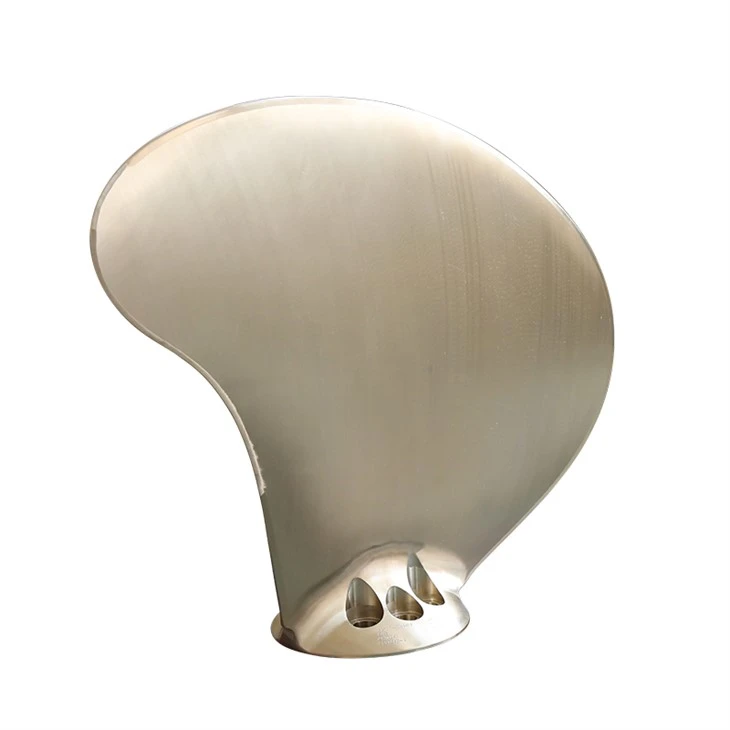
Characteristics of the Propeller Wake
Velocity Distribution
The velocity distribution in the propeller wake is non - uniform. The highest velocities are typically found near the center of the wake, close to the propeller hub. As we move radially outward from the hub, the velocity decreases. The axial velocity in the wake is higher than the free - stream velocity of the water in front of the propeller, which is a result of the acceleration provided by the propeller blades.
Turbulence
The propeller wake is highly turbulent. The rotation of the propeller blades causes the water to be sheared and mixed, creating eddies and vortices of various sizes. This turbulence can have both positive and negative effects. On one hand, it can enhance the mixing of the water, which can be beneficial for some applications such as waste dispersion. On the other hand, it can increase the drag on the ship and reduce the efficiency of the propulsion system.
Pressure Distribution
There is also a characteristic pressure distribution in the propeller wake. The pressure in the wake is generally lower than the pressure in the free - stream water in front of the propeller. This pressure difference is related to the acceleration of the water by the propeller and is responsible for the generation of thrust.
Significance of the Propeller Wake
Propulsion Efficiency
The characteristics of the propeller wake have a direct impact on the propulsion efficiency of the ship. A well - designed propeller can minimize the rotational component of the wake, which reduces the energy losses due to swirling motion. By optimizing the shape and pitch of the propeller blades, we can increase the axial velocity of the wake and thus improve the thrust and efficiency of the propulsion system.

Hull Interaction
The propeller wake also interacts with the hull of the ship. The turbulent flow in the wake can cause vibrations and noise on the hull. Additionally, the wake can affect the flow of water around the hull, which can either increase or decrease the drag on the ship. Understanding this interaction is crucial for designing ships with better hydrodynamic performance.
Environmental Impact
The propeller wake can have environmental implications. The turbulence and mixing in the wake can affect the distribution of nutrients and pollutants in the water. In some cases, it can also cause harm to marine life, especially if the propeller is operating in sensitive areas.
Types of Marine Propellers and Their Wakes
Copper Alloy Propeller
Copper alloy propellers are known for their high strength and corrosion resistance. These propellers can be designed to produce a more efficient wake compared to some other materials. The shape and surface finish of copper alloy propellers can be carefully controlled to reduce turbulence and improve the axial flow in the wake, leading to better propulsion efficiency.
Motor Carrier Propeller
Motor carrier propellers are used in various types of motor - driven vessels. These propellers often need to operate under different load conditions. The wake characteristics of motor carrier propellers can vary depending on the speed and load of the vessel. For example, at higher speeds, the wake may be more turbulent, and the rotational component may be more significant.
Stone - Throwing Ship Propeller
Stone - throwing ship propellers are designed for specific applications where the vessel needs to operate in shallow or rocky waters. These propellers are often more robust and may have a different wake pattern compared to other types of propellers. The wake of a stone - throwing ship propeller may be more focused on generating sufficient thrust to move the vessel in difficult conditions, which can result in a more concentrated and powerful axial wake.
Measuring and Analyzing the Propeller Wake
To understand the characteristics of the propeller wake, various measurement techniques are used. One common method is the use of flow visualization techniques, such as dye injection or particle image velocimetry (PIV). These techniques allow us to observe the flow patterns in the wake and measure the velocity and turbulence characteristics.
Computational fluid dynamics (CFD) is also a powerful tool for analyzing the propeller wake. CFD simulations can provide detailed information about the velocity, pressure, and turbulence distribution in the wake. By using CFD, we can optimize the design of the propeller to improve its performance and reduce the negative effects of the wake.
Our Role as a Marine Propeller Supplier
As a Marine Propeller supplier, we are committed to providing high - quality propellers that are designed to minimize the negative effects of the propeller wake and maximize the propulsion efficiency. Our team of engineers uses the latest design and manufacturing techniques to ensure that our propellers are optimized for different types of vessels and operating conditions.
We offer a wide range of propellers, including Copper Alloy Propeller, Motor Carrier Propeller, and Stone - Throwing Ship Propeller. Each propeller is carefully tested and inspected to meet the highest standards of quality and performance.
Contact Us for Procurement and洽谈
If you are in the market for a marine propeller, we invite you to contact us. Our experienced sales team is ready to assist you in selecting the right propeller for your vessel. We can provide detailed technical information, pricing, and delivery options. Whether you are a shipbuilder, a shipowner, or a marine operator, we are here to meet your needs.
References
- Kerwin, J. E. (1984). Propeller theory. Annual Review of Fluid Mechanics, 16(1), 385 - 427.
- Breslin, J. P., & Andersen, P. (1994). Hydrodynamics of ship propellers. Cambridge University Press.
- van Terwisga, T. (1994). Propeller design and analysis. The Netherlands Ship Model Basin.


