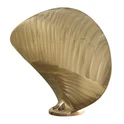
Can a copper alloy propeller be repaired? This is a question that often comes up among boat owners, operators, and those involved in the maritime industry. As a supplier of copper alloy propellers, I've encountered this query numerous times, and in this blog, I'll delve into the details of whether and how copper alloy propellers can be repaired.


Understanding Copper Alloy Propellers
Copper alloy propellers are widely used in the maritime sector due to their excellent properties. Copper alloys, such as bronze, offer high strength, good corrosion resistance, and excellent casting properties. These characteristics make them suitable for various types of vessels, from small fishing boats to large commercial ships.
The use of copper alloy propellers can be found in different vessel types. For example, the Offshore Oilfield Supply Vessel Propeller requires a propeller that can withstand the harsh offshore environment, including saltwater corrosion and high - stress operation. Similarly, the River Trade Vessel Propeller needs to be durable enough to handle the variable water conditions in rivers, such as sediment and debris. And the Offshore Vessel Propeller is designed for vessels operating in the open sea, where it must perform efficiently under different weather and sea states.
Common Damages to Copper Alloy Propellers
Before discussing repair methods, it's important to understand the common types of damage that copper alloy propellers may suffer.
- Physical Damage: This includes dents, cracks, and chips. Physical damage can occur due to collisions with underwater objects like rocks, logs, or other vessels. For example, a small fishing boat may accidentally hit a submerged rock while navigating in shallow waters, causing a dent or chip on the propeller blade.
- Corrosion: Even though copper alloys have good corrosion resistance, they are still susceptible to corrosion over time, especially in saltwater environments. Corrosion can lead to the thinning of the propeller blades, reducing their strength and efficiency. Galvanic corrosion can also occur when different metals are in contact in a conductive medium, such as seawater.
- Erosion: High - speed water flow can cause erosion on the propeller blades. This is particularly common in vessels that operate at high speeds or in areas with strong water currents. Erosion can gradually wear away the surface of the propeller, affecting its hydrodynamic performance.
Repairing Copper Alloy Propellers
The good news is that in many cases, copper alloy propellers can be repaired. However, the feasibility of repair depends on the extent and type of damage.
Minor Damage Repair
- Dent and Chip Repair: For minor dents and chips, the propeller can often be repaired by filling the damaged area with a suitable copper alloy filler material. The filler is then welded or brazed to the propeller, and the surface is ground and polished to restore the original shape and smoothness. This process requires skilled technicians who are familiar with the properties of copper alloys and welding techniques.
- Surface Cleaning and Coating: In cases of light corrosion or erosion, the propeller can be cleaned to remove the corroded or eroded layer. A protective coating can then be applied to prevent further corrosion. There are various types of coatings available, such as epoxy - based coatings, which can provide a barrier between the propeller and the surrounding environment.
Major Damage Repair
- Crack Repair: Cracks in copper alloy propellers are more serious and require careful assessment. If the crack is small and does not extend deep into the blade, it may be possible to repair it by welding. However, if the crack is large or has propagated through the blade, it may be necessary to replace the damaged blade or even the entire propeller. Welding a crack in a propeller requires strict quality control to ensure the integrity of the repair.
- Blade Replacement: In cases where a propeller blade is severely damaged beyond repair, the blade can be replaced. This involves removing the damaged blade and installing a new one that is precisely machined to match the specifications of the original propeller. Blade replacement requires specialized equipment and expertise to ensure proper alignment and balance of the propeller.
Advantages of Repairing Copper Alloy Propellers
- Cost - Effectiveness: Repairing a propeller is often much cheaper than replacing it with a new one. This is especially important for small - and medium - sized vessel owners who may have budget constraints. By repairing the propeller, they can save a significant amount of money while still maintaining the performance of their vessels.
- Environmental Benefits: Repairing propellers reduces the demand for new propellers, which in turn reduces the consumption of raw materials and energy required for manufacturing. This is in line with the growing trend of sustainable development in the maritime industry.
- Minimal Downtime: Repairing a propeller usually takes less time than waiting for a new propeller to be manufactured and delivered. This means that the vessel can return to service more quickly, minimizing the loss of revenue for commercial operators.
Limitations of Repair
While copper alloy propellers can be repaired in many cases, there are some limitations.
- Structural Integrity: If the damage is so severe that it compromises the structural integrity of the propeller, repair may not be a viable option. For example, if a propeller has multiple large cracks or has been severely deformed, it may be safer and more cost - effective to replace the entire propeller.
- Performance Restoration: In some cases, even after repair, the propeller may not fully regain its original performance. This is especially true for propellers that have suffered extensive erosion or corrosion, which can affect the hydrodynamic properties of the blades.
Quality Assurance in Propeller Repair
To ensure the reliability and performance of the repaired propeller, strict quality assurance measures should be implemented.
- Inspection and Testing: Before and after the repair process, the propeller should be thoroughly inspected. Non - destructive testing methods, such as ultrasonic testing and dye penetrant testing, can be used to detect any hidden cracks or defects. After repair, the propeller should be balanced to ensure smooth operation.
- Compliance with Standards: The repair process should comply with relevant industry standards and regulations. This includes standards for welding, material selection, and performance requirements. By adhering to these standards, the quality and safety of the repaired propeller can be guaranteed.
Contact for Propeller Repair and Procurement
If you are facing issues with your copper alloy propeller or are interested in purchasing a new one, we are here to help. Our team of experts has extensive experience in propeller repair and manufacturing. We can provide customized solutions based on your specific needs. Whether you need a repair for a damaged Offshore Oilfield Supply Vessel Propeller, a River Trade Vessel Propeller, or an Offshore Vessel Propeller, we have the expertise and resources to meet your requirements. Contact us to discuss your propeller needs and start the procurement or repair process.
References
- "Marine Propeller Design and Performance" by John Carlton.
- "Corrosion and Protection of Marine Structures" by Robert G. Kelly.
- Industry standards and guidelines from the International Maritime Organization (IMO) and relevant classification societies.