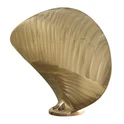
Tugboats are essential vessels in the maritime industry, playing a crucial role in various operations such as towing large ships, assisting in berthing and unberthing, and conducting salvage operations. The draft of a tugboat, which refers to the vertical distance between the waterline and the bottom of the hull, is a critical factor that affects its performance and maneuverability. One of the key components that can significantly influence the draft of a tugboat is its propellers. As a Tugboat Propellers supplier, I have witnessed firsthand how different propeller designs and characteristics can impact the draft of these powerful vessels.
The Basics of Tugboat Propellers
Before delving into how tugboat propellers affect the draft, it is important to understand the basic principles of propeller operation. A propeller is a rotating device with blades that convert the power generated by the tugboat's engine into thrust, which propels the vessel forward or backward. The efficiency and performance of a propeller depend on several factors, including its diameter, pitch, number of blades, and blade shape.
The diameter of a propeller refers to the distance across the circle formed by the tips of the blades. A larger diameter propeller generally produces more thrust but may also require more power to rotate. The pitch of a propeller is the theoretical distance that the propeller would move forward in one revolution if it were moving through a solid medium. A higher pitch propeller can move the tugboat forward at a faster speed but may require more power to operate.
The number of blades on a propeller can also affect its performance. A propeller with more blades can produce more thrust but may also experience more drag, which can reduce the efficiency of the propeller. The blade shape of a propeller is designed to optimize the flow of water around the blades, which can improve the efficiency and performance of the propeller.
How Tugboat Propellers Affect Draft
The draft of a tugboat is influenced by several factors, including the weight of the vessel, the distribution of the weight, and the shape of the hull. Tugboat propellers can also have a significant impact on the draft of the vessel in several ways.
Thrust and Draft
One of the primary ways that tugboat propellers affect the draft is through the generation of thrust. When the propeller rotates, it creates a force that pushes the water backward, which in turn propels the tugboat forward. This force can cause the bow of the tugboat to rise and the stern to sink, which can increase the draft at the stern of the vessel.
The amount of thrust generated by the propeller depends on several factors, including the size and design of the propeller, the power of the engine, and the speed of the vessel. A larger propeller or a propeller with a higher pitch can generate more thrust, which can cause a greater change in the draft of the tugboat.


Cavitation and Draft
Cavitation is a phenomenon that occurs when the pressure of the water around the propeller blades drops below the vapor pressure of the water, causing the water to vaporize and form bubbles. These bubbles can collapse suddenly, creating a shock wave that can damage the propeller blades and reduce the efficiency of the propeller.
Cavitation can also affect the draft of the tugboat. When cavitation occurs, the propeller may lose some of its thrust, which can cause the tugboat to slow down and the draft to increase. In addition, the shock waves created by the collapsing bubbles can cause the hull of the tugboat to vibrate, which can also affect the draft of the vessel.
Propeller Design and Draft
The design of the tugboat propeller can also have a significant impact on the draft of the vessel. A propeller with a more efficient design can generate more thrust with less power, which can reduce the amount of fuel consumed by the tugboat and improve its performance. A propeller with a more efficient design can also reduce the amount of cavitation that occurs, which can improve the draft of the vessel.
For example, a propeller with a skewed blade design can reduce the amount of cavitation that occurs by improving the flow of water around the blades. A propeller with a variable pitch design can also improve the efficiency of the propeller by adjusting the pitch of the blades to match the operating conditions of the tugboat.
Choosing the Right Tugboat Propellers
As a Tugboat Propellers supplier, I understand the importance of choosing the right propellers for your tugboat. The right propellers can improve the performance and efficiency of your tugboat, reduce the amount of fuel consumed, and extend the lifespan of your propellers.
When choosing tugboat propellers, it is important to consider several factors, including the size and type of your tugboat, the operating conditions of the vessel, and your specific requirements. A larger tugboat may require a larger propeller to generate enough thrust, while a smaller tugboat may require a smaller propeller to operate efficiently.
The operating conditions of the tugboat, such as the water depth, the speed of the vessel, and the type of towing operations, can also affect the choice of propellers. For example, a tugboat that operates in shallow water may require a propeller with a smaller diameter to avoid hitting the bottom, while a tugboat that operates in deep water may require a propeller with a larger diameter to generate more thrust.
In addition to the size and operating conditions of the tugboat, it is also important to consider your specific requirements when choosing tugboat propellers. For example, if you require a propeller that can generate more thrust, you may need to choose a propeller with a larger diameter or a higher pitch. If you require a propeller that can operate efficiently at low speeds, you may need to choose a propeller with a variable pitch design.
Our Tugboat Propellers Products
At our company, we offer a wide range of Tugboat Propellers to meet the needs of our customers. Our propellers are designed and manufactured using the latest technology and materials to ensure the highest quality and performance.
We offer 5 M Propeller for Trawler that are suitable for a variety of trawling operations. These propellers are designed to provide high thrust and efficiency, while also reducing the amount of cavitation that occurs.
In addition, we also offer Cod Fishing Vessels Propeller that are specifically designed for cod fishing vessels. These propellers are designed to provide high thrust and efficiency, while also reducing the amount of noise and vibration that occurs.
Contact Us for Tugboat Propellers
If you are interested in purchasing tugboat propellers or have any questions about our products, please contact us. Our team of experts is available to provide you with the information and support you need to choose the right propellers for your tugboat.
We understand the importance of providing high-quality products and excellent customer service. That's why we offer a wide range of propellers to meet the needs of our customers, and we are committed to providing the best possible support and service to ensure your satisfaction.
References
- Lewis, E. V. (Ed.). (1988). Principles of Naval Architecture. Society of Naval Architects and Marine Engineers.
- Schneekluth, H., & Bertram, V. (1998). Ship Design for Efficiency and Economy. Butterworth-Heinemann.
- van Lammeren, C. C., et al. (1969). Resistance and Propulsion of Ships. Elsevier.