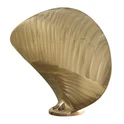
As a supplier of container ship propellers, I've witnessed firsthand the complex interplay between ice and these crucial marine components. The impact of ice on a container ship propeller is a multifaceted issue that encompasses mechanical, operational, and safety aspects. In this blog, I'll delve into the various ways ice can affect a container ship propeller and discuss the implications for ship operators and the shipping industry as a whole.
Physical Damage to the Propeller
One of the most immediate and visible impacts of ice on a container ship propeller is physical damage. When a ship encounters ice, the propeller blades can collide with ice chunks, leading to dents, chips, and even fractures. These impacts can occur due to direct contact with large ice floes or when the propeller is operating in ice-laden waters where smaller ice particles are present.
The leading edges of the propeller blades are particularly vulnerable to damage. As the blades rotate through the water, they can strike ice at high speeds, causing significant stress on the blade material. Over time, repeated impacts can weaken the blades, leading to fatigue cracks and ultimately blade failure. This not only affects the performance of the propeller but also poses a serious safety risk to the ship and its crew.


In addition to damage from direct impacts, ice can also cause erosion of the propeller blades. As ice particles flow over the blade surface, they can abrade the material, gradually wearing it down. This erosion can reduce the efficiency of the propeller by altering its shape and surface finish, leading to increased fuel consumption and reduced thrust.
Reduced Propeller Efficiency
Ice can also have a significant impact on the efficiency of a container ship propeller. When a propeller operates in ice-laden waters, the presence of ice can disrupt the flow of water around the blades, creating additional drag and reducing the propeller's ability to generate thrust. This can result in a decrease in ship speed and an increase in fuel consumption.
The formation of ice on the propeller blades can also contribute to reduced efficiency. As ice accumulates on the blades, it can change their shape and surface roughness, altering the flow of water and reducing the propeller's performance. This is particularly problematic in cold climates where ice can form quickly and thickly on the blades.
Furthermore, the presence of ice can cause cavitation to occur more readily. Cavitation is a phenomenon that occurs when the pressure of the water around the propeller blades drops below the vapor pressure, causing bubbles to form and collapse. This can lead to damage to the propeller blades and a further reduction in efficiency.
Operational Challenges
The impact of ice on a container ship propeller also presents several operational challenges for ship operators. In ice-laden waters, ships may need to reduce their speed to avoid damage to the propeller, which can result in longer transit times and increased costs. Additionally, the presence of ice can make it more difficult to maneuver the ship, increasing the risk of collisions and other accidents.
Ship operators may also need to take additional precautions when operating in ice-laden waters, such as using icebreakers to clear a path or installing ice protection systems on the propeller. These measures can add to the cost and complexity of operating a container ship in these conditions.
Safety Risks
The damage and reduced efficiency caused by ice can pose significant safety risks to a container ship and its crew. A damaged propeller can lead to a loss of thrust, making it difficult to control the ship's speed and direction. This can increase the risk of collisions with other vessels, icebergs, or shorelines.
In addition, the presence of ice on the propeller blades can cause vibrations and noise, which can be a source of discomfort for the crew and may also indicate potential problems with the propeller. These vibrations can also cause damage to other components of the ship, such as the shaft and bearings.
Mitigation Strategies
To mitigate the impact of ice on a container ship propeller, several strategies can be employed. One approach is to design propellers that are more resistant to ice damage. This can involve using stronger materials, such as stainless steel or titanium, and incorporating features such as reinforced leading edges and ice guards.
Another strategy is to use ice protection systems, such as ice deflectors or heating elements, to prevent ice from forming on the propeller blades. These systems can help to maintain the efficiency of the propeller and reduce the risk of damage.
Ship operators can also take steps to minimize the risk of encountering ice, such as using ice charts and weather forecasts to plan their routes and avoiding ice-laden waters whenever possible. In addition, regular maintenance and inspection of the propeller can help to detect and address any damage or issues before they become serious.
Conclusion
The impact of ice on a container ship propeller is a complex and challenging issue that requires careful consideration by ship operators and the shipping industry. By understanding the various ways ice can affect a propeller and implementing appropriate mitigation strategies, it is possible to reduce the risk of damage, improve efficiency, and enhance the safety of container ships operating in ice-laden waters.
As a supplier of container ship propellers, we are committed to providing our customers with high-quality, reliable propellers that are designed to withstand the challenges of operating in ice-laden waters. Our Saury Boat Propeller, 3 M Propeller for Cargo Ship, and Multi-purpose Vessel Propeller are all engineered to provide optimal performance and durability in even the most demanding conditions.
If you are interested in learning more about our container ship propellers or would like to discuss your specific requirements, please do not hesitate to contact us. We look forward to working with you to ensure the safe and efficient operation of your container ship.
References
- Carlton, J. S. (2007). Marine Propellers and Propulsion. Butterworth-Heinemann.
- Lewis, E. V. (1988). Principles of Naval Architecture. Society of Naval Architects and Marine Engineers.
- Schneekluth, H., & Bertram, V. (1998). Ship Design for Efficiency and Economy. Butterworth-Heinemann.