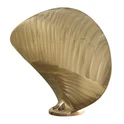
Hey there! I'm in the business of supplying cargo ship propellers, and let me tell you, it's a wild ride. There are so many factors that can affect the thrust of a cargo ship propeller, and understanding them is crucial for anyone looking to optimize their ship's performance. So, let's dive in and explore what makes these propellers tick.
1. Propeller Design
The design of the propeller is, hands down, one of the most important factors affecting thrust. First off, we've got the number of blades. A propeller can have anywhere from 3 to 6 blades, sometimes even more. Generally, more blades can provide more thrust at lower speeds. But here's the catch: more blades also mean more drag. So, it's a bit of a balancing act. For ships that need to maneuver in tight spaces or operate at low speeds, like tugboats, a propeller with more blades might be the way to go. On the other hand, ships that cruise at high speeds might benefit from a propeller with fewer blades to reduce drag.
The pitch of the propeller is another key design element. Pitch is basically the distance the propeller would move forward in one revolution if it were moving through a solid medium. A higher pitch means the propeller will move the ship forward more with each revolution, which can increase thrust and speed. However, if the pitch is too high, the engine might not be able to turn the propeller efficiently, and you'll end up losing power. It's like trying to pedal a bike in too high a gear – you just can't get the momentum going.
The shape of the blades also matters. Blades can be tapered, curved, or have different cross - sectional shapes. These shapes affect how the water flows around the blades. A well - designed blade shape can reduce cavitation. Cavitation is when the pressure around the blade drops so low that water vaporizes, forming bubbles. When these bubbles collapse, they can damage the propeller blades and reduce thrust. For example, Container Ship Propeller is designed with specific blade shapes to minimize cavitation and maximize thrust for container ships.
2. Ship Speed
The speed of the ship itself has a big impact on propeller thrust. As the ship moves through the water, the relative speed between the propeller and the water changes. At low speeds, the propeller has to work harder to generate enough thrust to move the ship forward. The water around the propeller is more or less static, and the propeller has to accelerate it to create a reaction force that pushes the ship forward.
As the ship's speed increases, the water is already moving relative to the propeller. This can actually help the propeller generate more thrust because it doesn't have to start from a completely stationary water mass. However, there's a limit. At very high speeds, the drag on the ship and the propeller increases significantly. The propeller has to work against this increased drag, and if the engine can't provide enough power, the thrust will start to decrease.


3. Engine Power and RPM
The power of the ship's engine and the revolutions per minute (RPM) at which it operates are directly related to propeller thrust. A more powerful engine can turn the propeller with more force, which generally means more thrust. But it's not just about raw power. The engine needs to be matched to the propeller. If the engine is too powerful for the propeller, it might spin the propeller too fast, causing cavitation and reducing efficiency.
The RPM of the engine also plays a role. Increasing the RPM can increase the thrust, but only up to a certain point. Beyond that point, the propeller might start to experience cavitation or other issues that reduce its effectiveness. For example, if you try to run a propeller at an extremely high RPM, the water might not be able to flow smoothly around the blades, and you'll end up with a loss of thrust.
4. Water Conditions
The conditions of the water the ship is sailing in can have a huge impact on propeller thrust. Temperature is one factor. Warmer water is less dense than colder water. A propeller in warmer water might not be able to generate as much thrust as it would in colder water because there's less mass of water for the propeller to act on.
Salinity also matters. Saltwater is denser than freshwater. A propeller in saltwater can generate more thrust because it can push against a greater mass of water. This is why ships often perform better in the ocean compared to rivers or lakes.
The presence of waves and currents can also affect thrust. Waves can disrupt the flow of water around the propeller, causing uneven forces on the blades. This can reduce the efficiency of the propeller and the overall thrust. Strong currents can either help or hinder the ship's movement. If the current is in the same direction as the ship's motion, it can increase the relative speed of the water around the propeller, potentially increasing thrust. But if the current is against the ship's motion, the propeller has to work harder to overcome the resistance, and the thrust might be reduced.
5. Hull Design
The design of the ship's hull can influence propeller thrust in several ways. A streamlined hull reduces drag on the ship as it moves through the water. When there's less drag on the ship, the propeller doesn't have to work as hard to maintain a certain speed, which means it can generate more thrust with the same amount of power.
The position of the propeller relative to the hull is also important. If the propeller is too close to the hull, the flow of water around the propeller can be disrupted by the hull. This can lead to uneven forces on the propeller blades and a reduction in thrust. On the other hand, if the propeller is too far from the hull, it might not be able to take advantage of the flow of water along the hull, which can also reduce efficiency.
6. Maintenance and Wear
The condition of the propeller itself is crucial for maintaining thrust. Over time, propellers can get damaged due to corrosion, impact with debris in the water, or normal wear and tear. Corrosion can change the shape of the blades, which can disrupt the flow of water around them and reduce thrust. A propeller with a damaged blade might not be able to generate as much thrust as a fully intact one.
Regular maintenance is essential. This includes cleaning the propeller to remove any marine growth, such as barnacles or algae. Marine growth can increase the drag on the propeller and reduce its efficiency. For example, a Saury Boat Propeller needs to be properly maintained to ensure it can provide the necessary thrust for saury boats.
7. Loading Conditions
The amount and distribution of the cargo on the ship can affect propeller thrust. A heavily loaded ship has more mass to move, which means the propeller has to generate more thrust to achieve the same speed as a lightly loaded ship. If the cargo is not evenly distributed, it can cause the ship to list or trim. This can change the position of the propeller in the water and the flow of water around it, potentially reducing thrust.
For example, if a ship is trimmed by the bow, the propeller might be partially out of the water, which can significantly reduce its ability to generate thrust. On the other hand, if the ship is trimmed by the stern, the propeller might be in a more favorable position in the water, but the increased draft at the stern can also increase drag, which the propeller has to work against.
Conclusion
So, as you can see, there are a whole bunch of factors that affect the thrust of a cargo ship propeller. From the design of the propeller itself to the water conditions and the ship's loading, every little thing matters. As a cargo ship propeller supplier, I understand the importance of getting all these factors right. We offer a wide range of propellers, including Purse Seiner Propeller, designed to meet the specific needs of different types of cargo ships.
If you're in the market for a new propeller or looking to optimize your current one, I'd love to have a chat. We can discuss your ship's requirements, the factors affecting your propeller thrust, and find the best solution for you. Contact us to start the conversation and take your ship's performance to the next level.
References
- "Marine Propellers and Propulsion" by John Carlton
- "Ship Hydrodynamics" by David Taylor