


Hey there! I'm part of a cruise ship propeller supply team, and I'm super stoked to take you behind the scenes of how cruise ship propellers are designed. It's a wild ride that involves a whole bunch of cool science and engineering, so let's dive right in!
The Basics of Propeller Design
First off, let's talk about what a propeller actually does. In simple terms, a propeller is like a big fan that pushes water backward, which in turn moves the ship forward. It's all about creating thrust, and the design of the propeller plays a huge role in how efficiently it can do that.
When we start designing a propeller, the very first thing we look at is the ship itself. Every cruise ship is unique, with its own size, weight, speed requirements, and operating conditions. For example, a large luxury cruise ship that sails in calm waters will need a different propeller than a smaller, more agile vessel that navigates through rough seas.
One of the key factors we consider is the diameter of the propeller. A larger diameter propeller can generally create more thrust, but it also requires more power to turn. So, we have to find the right balance based on the ship's engine power and the desired speed. We also look at the number of blades on the propeller. More blades can provide smoother operation and better thrust at lower speeds, but they can also increase drag at higher speeds.
The Shape of the Blades
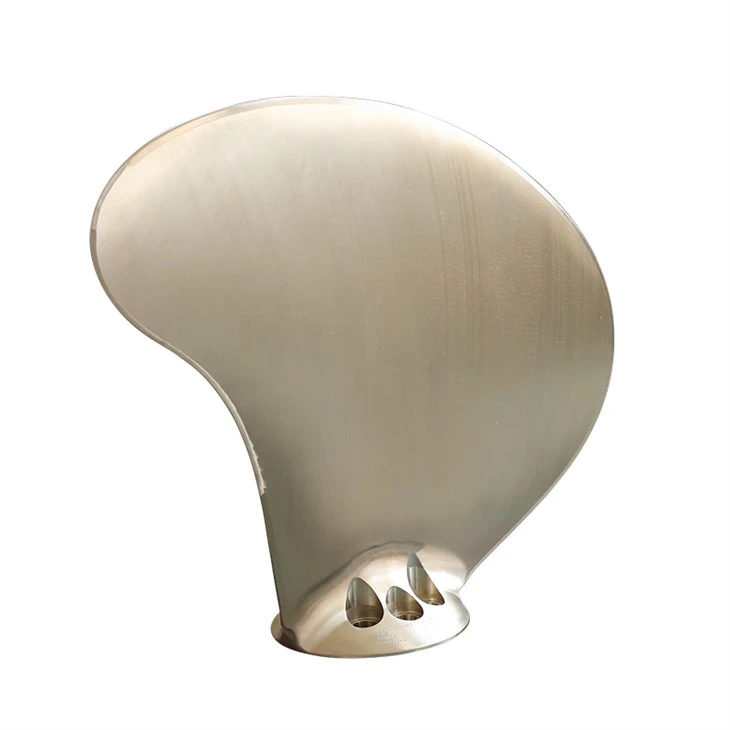
The shape of the propeller blades is where things get really interesting. Each blade is carefully designed to have a specific curve and twist along its length. This is known as the blade profile, and it's crucial for generating lift and thrust.
The leading edge of the blade is the part that first cuts through the water, and it's usually sharp to reduce drag. The trailing edge is where the water exits the blade, and it's designed to smoothly direct the flow of water backward. The curve of the blade, called the camber, helps to create a pressure difference between the front and back of the blade, which generates lift.
We also have to consider the pitch of the propeller blades. The pitch is the distance the propeller would move forward in one revolution if it were moving through a solid medium. A higher pitch means the propeller will move the ship forward faster, but it also requires more power. So, we adjust the pitch based on the ship's speed requirements and the engine's power output.

Materials and Manufacturing
Once we've designed the perfect propeller, it's time to choose the right materials and start manufacturing. The materials we use for cruise ship propellers need to be strong, durable, and resistant to corrosion. Most of the time, we use high-strength alloys like bronze or stainless steel.
Bronze is a popular choice because it has excellent corrosion resistance and is relatively easy to machine. Stainless steel, on the other hand, is stronger and more resistant to wear, but it can be more expensive. We also have to consider the weight of the materials, as a heavier propeller can put more strain on the ship's engine and bearings.
The manufacturing process for cruise ship propellers is a complex and precise one. We start by creating a detailed 3D model of the propeller using computer-aided design (CAD) software. This allows us to visualize the design and make any necessary adjustments before we start cutting metal.
Next, we use a process called casting to create the propeller. In casting, we pour molten metal into a mold that has the shape of the propeller. This requires a high level of precision to ensure that the final product meets our design specifications. After casting, the propeller is machined to smooth out any rough edges and to achieve the exact dimensions we need.
Testing and Optimization
Once the propeller is manufactured, it's not ready to go straight onto a ship. We have to test it to make sure it performs as expected. We do this in a test tank, where we can simulate different operating conditions and measure the propeller's performance.
During testing, we measure things like thrust, torque, and efficiency. We also look for any signs of cavitation, which is a phenomenon where bubbles form on the surface of the propeller blades due to low pressure. Cavitation can cause damage to the propeller and reduce its efficiency, so we want to avoid it at all costs.
If the test results aren't up to par, we go back to the drawing board and make some adjustments to the design. This might involve changing the blade profile, the pitch, or the number of blades. We keep testing and optimizing until we're satisfied with the performance of the propeller.
Our Product Range
At our company, we offer a wide range of cruise ship propellers to meet the needs of different customers. Whether you're looking for a 3 Meter Cruise Ship Propeller, a Stone-Throwing Ship Propeller, or a Sweet Shrimp Fishing Vessel Propeller, we've got you covered.
Our propellers are designed and manufactured using the latest technology and the highest quality materials. We work closely with our customers to understand their specific requirements and to provide them with the best possible solution. Whether you're building a new cruise ship or looking to replace an existing propeller, we can help.
Contact Us for a Quote
If you're in the market for a cruise ship propeller, we'd love to hear from you. Our team of experts is ready to answer any questions you might have and to provide you with a free quote. Just reach out to us, and we'll work with you to find the perfect propeller for your needs.
References
- "Marine Propellers and Propulsion" by John Carlton
- "Ship Hydrodynamics" by B. S. V. S. Sastry


