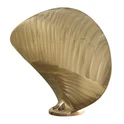
As a seasoned supplier of marine screw propellers, I've witnessed firsthand the crucial role these components play in the performance of vessels across various sea conditions. The dynamic response of a marine screw propeller is a complex interplay of factors, including the design of the propeller, the characteristics of the vessel, and the environmental conditions in which it operates. In this blog post, I'll delve into the intricacies of how marine screw propellers respond to different sea conditions and why understanding this is essential for shipowners and operators.
Understanding the Basics of Marine Screw Propellers
Before we explore the dynamic response of marine screw propellers, let's first understand the basic principles behind their operation. A marine screw propeller is a device that converts rotational energy from an engine into thrust, propelling the vessel forward. It consists of a hub and a series of blades that are designed to create a pressure difference between the front and back of the propeller, generating a force that pushes the vessel through the water.
The performance of a marine screw propeller is influenced by several factors, including the number of blades, the pitch of the blades, the diameter of the propeller, and the shape of the blades. These factors are carefully designed to optimize the propeller's efficiency, thrust, and cavitation characteristics, which are all critical for the vessel's performance.
Dynamic Response in Calm Seas
In calm seas, the dynamic response of a marine screw propeller is relatively straightforward. The propeller operates in a stable environment, with minimal interference from waves or currents. As a result, the propeller can operate at its designed efficiency, generating maximum thrust with minimal energy consumption.
In this ideal scenario, the propeller's blades are able to maintain a consistent angle of attack, which is the angle between the blade and the oncoming water flow. This allows the propeller to generate a smooth and continuous flow of water, resulting in efficient propulsion. Additionally, the absence of waves and currents reduces the risk of cavitation, which is the formation of vapor bubbles on the surface of the propeller blades. Cavitation can cause damage to the propeller blades and reduce its efficiency, so it's important to minimize its occurrence.
Dynamic Response in Rough Seas
In rough seas, the dynamic response of a marine screw propeller becomes more complex. The presence of waves and currents can cause the propeller to experience significant variations in the water flow, which can affect its performance and efficiency.
One of the main challenges in rough seas is the variation in the angle of attack of the propeller blades. As the vessel pitches and rolls in the waves, the angle between the blade and the oncoming water flow can change rapidly, causing the propeller to lose efficiency and generate less thrust. To compensate for this, modern propellers are often designed with adjustable pitch blades, which can be adjusted to maintain a consistent angle of attack regardless of the vessel's motion.
Another challenge in rough seas is the increased risk of cavitation. The turbulent water flow and the rapid changes in pressure can cause the formation of vapor bubbles on the surface of the propeller blades, which can lead to damage and reduced efficiency. To mitigate this risk, propellers are often designed with special features, such as blade coatings or ventilation systems, to reduce the likelihood of cavitation.
Dynamic Response in Different Sea Conditions
In addition to calm and rough seas, marine screw propellers also need to be able to operate effectively in a variety of other sea conditions, such as shallow waters, strong currents, and ice-covered waters.
In shallow waters, the propeller's performance can be affected by the proximity of the seabed. The presence of the seabed can cause the water flow to become more turbulent, which can reduce the propeller's efficiency and increase the risk of cavitation. To address this issue, propellers are often designed with a smaller diameter or a higher pitch to reduce the risk of contact with the seabed.
In strong currents, the propeller needs to be able to generate enough thrust to overcome the force of the current. This requires a propeller with a higher pitch and a larger diameter, which can generate more thrust at a given speed. Additionally, the propeller needs to be able to operate efficiently in a highly turbulent environment, which can be challenging.
In ice-covered waters, the propeller needs to be able to withstand the impact of icebergs and ice floes. This requires a propeller with a robust design and a high level of durability. Additionally, the propeller needs to be able to operate efficiently in a low-temperature environment, which can affect its performance and reliability.
The Importance of Choosing the Right Propeller
Given the complex dynamic response of marine screw propellers in different sea conditions, it's essential to choose the right propeller for your vessel. The right propeller can significantly improve the vessel's performance, efficiency, and reliability, while the wrong propeller can lead to poor performance, increased fuel consumption, and costly repairs.
When choosing a propeller, it's important to consider several factors, including the vessel's size, type, and intended use, as well as the sea conditions in which it will operate. Additionally, it's important to choose a propeller from a reputable manufacturer that has a proven track record of producing high-quality propellers.
At our company, we offer a wide range of marine screw propellers, including the Yuan Ding NAB-3000 Propeller, the Sweet Shrimp Fishing Vessel Propeller, and the AquaGlide StarCruise Propeller. These propellers are designed to meet the specific needs of different vessels and sea conditions, ensuring optimal performance and efficiency.
Conclusion
The dynamic response of a marine screw propeller is a complex and fascinating topic that has a significant impact on the performance and efficiency of vessels. By understanding how marine screw propellers respond to different sea conditions, shipowners and operators can make informed decisions about the design and selection of their propellers, ensuring optimal performance and reliability.
If you're in the market for a marine screw propeller, we encourage you to contact us to discuss your specific needs. Our team of experts will be happy to help you choose the right propeller for your vessel, and we'll work with you to ensure that it meets your expectations.


References
- Carlton, J. S. (2007). Marine Propellers and Propulsion. Butterworth-Heinemann.
- Kerwin, J. E., & Lee, C. H. (2006). Propeller Cavitation and Hydroelasticity. Cambridge University Press.
- Molland, A. F., Turnock, S. R., & Hudson, D. A. (2011). Ship Resistance and Propulsion. Butterworth-Heinemann.