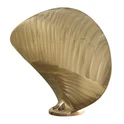
In the maritime industry, the quest for environmental sustainability has become a paramount concern. As a ship propeller supplier, we are at the forefront of this movement, constantly exploring ways to make ship propellers more environmentally friendly. This blog post delves into the various strategies and technologies we are implementing to achieve this goal.
The Environmental Impact of Traditional Ship Propellers
Traditional ship propellers have several environmental drawbacks. Firstly, they often operate with relatively low efficiency, which means that more fuel is burned to achieve the desired speed and thrust. This not only increases operating costs but also leads to higher emissions of greenhouse gases such as carbon dioxide (CO2), nitrogen oxides (NOx), and sulfur oxides (SOx). These emissions contribute to global warming, acid rain, and air pollution, posing significant threats to the environment and human health.
Secondly, the cavitation phenomenon associated with traditional propellers can cause damage to the propeller blades and the surrounding hull. Cavitation occurs when the pressure around the propeller blades drops below the vapor pressure of the water, causing the formation and collapse of vapor bubbles. This process not only reduces the efficiency of the propeller but also generates noise and vibration, which can have a negative impact on marine life.
Innovative Design and Materials
One of the key ways to make ship propellers more environmentally friendly is through innovative design and the use of advanced materials. Our team of engineers is constantly researching and developing new propeller designs that optimize hydrodynamic performance. By using computational fluid dynamics (CFD) simulations, we can analyze the flow of water around the propeller and make adjustments to the blade shape, pitch, and diameter to improve efficiency.
For example, we have developed a new type of propeller with a skewed blade design. This design reduces the occurrence of cavitation by distributing the load more evenly across the blade surface. As a result, the propeller operates more smoothly, with less noise and vibration, and higher efficiency. In addition, the skewed blade design can also reduce the wake field behind the ship, which can have a positive impact on the overall hydrodynamic performance of the vessel.
In terms of materials, we are exploring the use of lightweight and corrosion-resistant materials such as composites and titanium alloys. These materials not only reduce the weight of the propeller, which in turn reduces fuel consumption, but also have a longer lifespan and require less maintenance. For instance, composite materials can be molded into complex shapes, allowing for more efficient propeller designs. Titanium alloys, on the other hand, have excellent strength-to-weight ratios and are highly resistant to corrosion, making them ideal for use in marine environments.
Controllable Pitch Propellers
Controllable pitch propellers (CPPs) are another technology that can significantly improve the environmental performance of ship propellers. Unlike fixed-pitch propellers, which have a constant blade pitch, CPPs allow the pitch of the blades to be adjusted while the ship is in operation. This means that the propeller can be optimized for different operating conditions, such as varying speeds, loads, and sea states.
By adjusting the blade pitch, CPPs can improve the efficiency of the propeller at different speeds. For example, at low speeds, a larger blade pitch can be used to generate more thrust, while at high speeds, a smaller blade pitch can be used to reduce drag. This flexibility allows ships to operate more efficiently, reducing fuel consumption and emissions.
In addition, CPPs can also improve the maneuverability of ships. By changing the blade pitch, the propeller can generate reverse thrust, which is useful for docking and undocking operations. This reduces the need for auxiliary thrusters, which consume additional fuel and generate emissions.
You can learn more about our Business Boat Propeller and 4 Meter Cruise Ship Propeller on our website.
Energy Recovery Systems
Another approach to making ship propellers more environmentally friendly is through the use of energy recovery systems. These systems capture the energy that is normally wasted in the form of heat and kinetic energy and convert it into useful electrical or mechanical energy.
One example of an energy recovery system is a propeller shaft generator. This system uses the rotation of the propeller shaft to generate electricity, which can be used to power the ship's electrical systems. By using this system, the ship can reduce its reliance on auxiliary generators, which consume fuel and generate emissions.
In addition, we are also exploring the use of waste heat recovery systems. These systems capture the heat that is generated by the ship's engines and use it to produce steam, which can be used to drive a turbine and generate electricity. This not only reduces the ship's fuel consumption but also reduces the amount of heat that is released into the environment.
Noise and Vibration Reduction
As mentioned earlier, noise and vibration generated by ship propellers can have a negative impact on marine life. To address this issue, we are developing technologies to reduce the noise and vibration levels of our propellers.
One approach is to use passive noise reduction techniques, such as the use of damping materials on the propeller blades. These materials absorb the energy of the vibrations and reduce the amount of noise that is radiated into the water. Another approach is to use active noise control systems, which use sensors and actuators to detect and cancel out the noise and vibration signals.
In addition, we are also working on improving the alignment and balance of the propeller shaft to reduce vibration. By ensuring that the propeller is properly aligned and balanced, we can reduce the amount of vibration that is transmitted to the hull of the ship, which in turn reduces the noise levels.
Marine Screw Propeller Technology
Our Marine Screw Propeller technology is also an important part of our efforts to make ship propellers more environmentally friendly. We have made significant improvements to the design and manufacturing process of marine screw propellers to enhance their efficiency and reliability.
By using advanced manufacturing techniques such as precision casting and machining, we can ensure that the propeller blades have a smooth surface finish and accurate dimensions. This improves the hydrodynamic performance of the propeller and reduces the occurrence of cavitation. In addition, we are also implementing quality control measures throughout the manufacturing process to ensure that each propeller meets our high standards of performance and durability.
The Future of Environmentally Friendly Ship Propellers
The future of environmentally friendly ship propellers looks promising. As the demand for sustainable shipping continues to grow, we expect to see further advancements in propeller technology. In addition to the technologies mentioned above, we are also exploring the use of alternative power sources such as electric propulsion systems and fuel cells.
Electric propulsion systems offer several advantages over traditional diesel engines, including lower emissions, quieter operation, and higher efficiency. By combining electric propulsion with advanced propeller designs, we can create a more sustainable and environmentally friendly shipping solution.
Fuel cells, on the other hand, are a clean and efficient energy source that can be used to power ships. They produce electricity by combining hydrogen and oxygen, with water as the only byproduct. Although fuel cell technology is still in the early stages of development for marine applications, we believe that it has the potential to revolutionize the shipping industry in the future.


Contact Us for Procurement
If you are interested in our environmentally friendly ship propellers and would like to discuss procurement options, please feel free to contact us. Our team of experts is ready to provide you with detailed information about our products and services, and to work with you to find the best solution for your specific needs. We are committed to providing high-quality, sustainable propeller solutions that help you reduce your environmental impact while improving the performance of your vessels.
References
- Carlton, J. S. (2007). Marine Propellers and Propulsion. Butterworth-Heinemann.
- Breslin, J. P., & Andersen, P. (1994). Hydrodynamics of Ship Propellers. Cambridge University Press.
- Lewis, E. V. (Ed.). (1988). Principles of Naval Architecture. Society of Naval Architects and Marine Engineers.