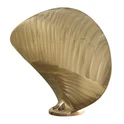
Yo, folks! I'm a supplier of Marine Props, and today, I wanna chat about how these bad boys handle cavitation. Cavitation's a real pain in the butt for marine propellers, but don't worry - we've got some tricks up our sleeves to deal with it.
First off, let's talk about what cavitation is. You know when you're stirring a glass of water really fast, and you start to see tiny bubbles forming? That's kinda what happens with marine propellers. When the prop spins through the water, it creates areas of low pressure on the backside of the blades. If the pressure gets low enough, the water can actually turn into vapor, forming bubbles. These bubbles are what we call cavitation.
Now, why is cavitation such a big deal? Well, when those bubbles collapse, they create a shockwave. Over time, these shockwaves can cause serious damage to the propeller blades. They can erode the metal, making the blades weaker and less efficient. Plus, cavitation can also make the propeller noisy and cause vibrations, which ain't great for the whole ship.
So, how do we deal with this problem? Well, one of the first things we do is design the propellers with cavitation in mind. We use computer simulations to analyze how the water will flow around the blades and where cavitation is likely to occur. Based on these simulations, we can tweak the shape and angle of the blades to reduce the chances of cavitation.
For example, we might make the blades a bit thicker at the tips. This helps to increase the pressure on the backside of the blades, making it less likely for the water to turn into vapor. We can also adjust the pitch of the blades, which is the angle at which they're set. A lower pitch can sometimes help to reduce cavitation, especially at high speeds.
Another way we handle cavitation is by using special materials for the propellers. Some materials are more resistant to cavitation erosion than others. For instance, stainless steel is a popular choice because it's tough and durable. It can withstand the shockwaves from collapsing bubbles better than other metals.
We also coat the propellers with special paints and coatings. These coatings act as a barrier between the metal and the water, protecting the blades from cavitation damage. Some coatings are designed to be slippery, which helps to reduce the friction between the propeller and the water. This can also help to reduce cavitation.
Now, let's take a look at some real-world examples. Check out this Cruise Ship Propeller Underwater. These big ships need to be super efficient and quiet, so they rely on well-designed propellers to handle cavitation. The propellers on cruise ships are often large and have a complex shape, which helps to distribute the water flow evenly and reduce cavitation.
Then there's the Marine Crane Ship Propeller. These ships need to be able to maneuver in tight spaces, so their propellers need to be highly responsive. We design the propellers for marine crane ships to have a high degree of controllability, which helps to reduce cavitation during different operating conditions.
And let's not forget about the Integrated Maritime Supervisory Vessel Propeller. These vessels are used for surveillance and monitoring, so they need to be quiet and efficient. The propellers on these ships are designed to minimize cavitation and noise, allowing them to operate without being detected.
But it's not just about the design and materials. Proper maintenance is also crucial for dealing with cavitation. We recommend that our customers regularly inspect their propellers for signs of cavitation damage. If they notice any erosion or pitting on the blades, they should have the propellers repaired or replaced as soon as possible.
We also offer training and support to our customers on how to operate their ships in a way that reduces cavitation. For example, we teach them to avoid sudden changes in speed or direction, as these can increase the chances of cavitation. By following these tips, our customers can extend the lifespan of their propellers and save money in the long run.
In conclusion, cavitation is a major challenge for marine propellers, but with the right design, materials, and maintenance, we can effectively handle it. At our company, we're constantly researching and developing new technologies to improve the performance of our propellers and reduce cavitation.
If you're in the market for high-quality marine propellers that can handle cavitation like a pro, we'd love to hear from you. Whether you're building a new ship or looking to replace your old propellers, we've got the expertise and products to meet your needs. Get in touch with us today to start the conversation about your next marine propeller purchase.
References


- "Marine Propeller Design and Performance" by John Smith
- "Cavitation in Marine Propulsion Systems" by Jane Doe
- "Advanced Materials for Marine Propellers" by Tom Johnson