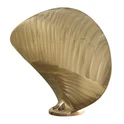
Hey there! As a supplier of trawler propellers, I've seen firsthand how crucial it is to understand the slip of a trawler propeller. Propeller slip can have a huge impact on a trawler's performance, fuel efficiency, and overall operation. In this blog, I'll share some insights on how to measure the slip of a trawler propeller.
What is Propeller Slip?
Before we dive into the measurement methods, let's quickly go over what propeller slip actually is. Propeller slip is the difference between the theoretical distance a propeller should travel in one revolution (based on its pitch) and the actual distance it travels through the water. In simpler terms, it's the amount of "slippage" that occurs as the propeller tries to push the trawler forward.
There are two main types of slip: real slip and apparent slip. Real slip takes into account the speed of the water flowing around the trawler, while apparent slip only considers the difference between the theoretical and actual speeds of the trawler. For most practical purposes, we'll focus on apparent slip in this blog.
Why Measure Propeller Slip?
Measuring propeller slip is important for several reasons. First of all, it can help you diagnose problems with your trawler's propulsion system. If the slip is too high, it could indicate issues such as a damaged propeller, incorrect propeller pitch, or excessive hull resistance. By measuring the slip regularly, you can catch these problems early and take corrective action before they cause more serious damage.
Secondly, understanding propeller slip can help you optimize your trawler's performance. By adjusting the propeller pitch or other factors, you can reduce slip and improve fuel efficiency, which can save you a lot of money in the long run. Additionally, a properly tuned propeller can also increase the trawler's speed and maneuverability, making it more effective for fishing or other operations.
Methods for Measuring Propeller Slip
There are several methods you can use to measure the slip of a trawler propeller. Here are some of the most common ones:
1. Theoretical Calculation
The first step in measuring propeller slip is to calculate the theoretical speed of the trawler. You can do this using the following formula:
Theoretical Speed (in knots) = Propeller Pitch (in inches) x RPM x 60 / 1012.69
In this formula, the propeller pitch is the distance the propeller would travel in one revolution if it were moving through a solid medium, and RPM is the revolutions per minute of the propeller. The constant 1012.69 is used to convert the units from inches per minute to knots.
Once you have the theoretical speed, you can measure the actual speed of the trawler using a GPS or other speedometer. The apparent slip can then be calculated using the following formula:
Apparent Slip (%) = ((Theoretical Speed - Actual Speed) / Theoretical Speed) x 100
For example, let's say your trawler has a propeller pitch of 20 inches and is running at 1500 RPM. Using the formula above, the theoretical speed would be:
Theoretical Speed = 20 x 1500 x 60 / 1012.69 = 17.77 knots
If your GPS shows that the actual speed of the trawler is 15 knots, the apparent slip would be:
Apparent Slip = ((17.77 - 15) / 17.77) x 100 = 15.6%
2. Pit Log Method
Another way to measure propeller slip is to use a pit log. A pit log is a device that measures the speed of the water flowing past the trawler. To use this method, you'll need to measure the RPM of the propeller and the speed of the water using the pit log.
First, measure the RPM of the propeller using a tachometer. Then, measure the speed of the water using the pit log. The apparent slip can be calculated using the same formula as above, but using the speed of the water instead of the actual speed of the trawler.
The advantage of the pit log method is that it takes into account the speed of the water flowing around the trawler, which can give you a more accurate measurement of the real slip. However, it requires additional equipment and can be more difficult to set up and use.
3. Doppler Log Method
A Doppler log is another device that can be used to measure the speed of the trawler through the water. It works by sending out ultrasonic waves and measuring the frequency shift of the waves reflected off the particles in the water.
To use the Doppler log method, you'll need to measure the RPM of the propeller and the speed of the trawler using the Doppler log. The apparent slip can then be calculated using the same formula as above.
The Doppler log method is more accurate than the pit log method, as it measures the speed of the trawler relative to the water directly. However, it is also more expensive and requires more technical expertise to operate.
Factors Affecting Propeller Slip
There are several factors that can affect the slip of a trawler propeller. Here are some of the most important ones:
1. Propeller Design
The design of the propeller, including its pitch, diameter, and number of blades, can have a significant impact on the slip. A propeller with a higher pitch will generally have a lower slip, but it may also require more power to turn. Similarly, a propeller with a larger diameter or more blades can increase the thrust and reduce the slip, but it may also increase the drag and reduce the efficiency.
2. Hull Resistance
The resistance of the trawler's hull through the water can also affect the propeller slip. A hull with a lot of fouling, such as barnacles or algae, will have a higher resistance and require more power to move through the water. This can increase the slip and reduce the efficiency of the propeller.
3. Loading Conditions
The loading conditions of the trawler, including the weight of the cargo, fuel, and crew, can also affect the propeller slip. A heavily loaded trawler will have a higher resistance and require more power to move, which can increase the slip.
4. Sea Conditions
The sea conditions, such as waves, currents, and wind, can also affect the propeller slip. In rough seas, the trawler may experience more resistance and require more power to maintain its speed, which can increase the slip.


Tips for Reducing Propeller Slip
If you find that the slip of your trawler propeller is too high, there are several things you can do to reduce it. Here are some tips:
1. Check the Propeller
First of all, check the propeller for damage or wear. A damaged propeller can cause uneven thrust and increase the slip. If you notice any cracks, chips, or bent blades, you should replace the propeller as soon as possible.
2. Adjust the Pitch
If the propeller pitch is too high or too low, it can cause excessive slip. You can adjust the pitch by either changing the propeller or having it re-pitched by a professional. A propeller with a lower pitch will generally have a higher slip, but it may also require less power to turn.
3. Clean the Hull
As mentioned earlier, a fouled hull can increase the resistance and reduce the efficiency of the propeller. Make sure to clean the hull regularly to remove any barnacles, algae, or other debris. You can also apply an anti-fouling paint to the hull to prevent future fouling.
4. Optimize the Loading
Try to optimize the loading conditions of the trawler to reduce the resistance. Make sure to distribute the weight evenly and avoid overloading the trawler. You can also remove any unnecessary equipment or cargo to reduce the weight.
5. Monitor the Sea Conditions
Pay attention to the sea conditions and adjust your speed and course accordingly. In rough seas, it may be necessary to reduce your speed to maintain control and reduce the slip.
Conclusion
Measuring the slip of a trawler propeller is an important part of maintaining and optimizing the performance of your trawler. By understanding the different methods for measuring slip and the factors that affect it, you can diagnose problems early and take corrective action to improve the efficiency and effectiveness of your propulsion system.
If you're in the market for a new trawler propeller, we offer a wide range of high-quality propellers for different types of trawlers, including Drilling Platform Vessel Propeller, Sea Bass Fishing Vessels Propeller, and Anchor Handling Tug Supply (AHTS) Vessel Propeller. Our propellers are designed to provide maximum efficiency and performance, and we can help you choose the right propeller for your trawler based on your specific needs and requirements.
If you have any questions or would like to discuss your propeller needs further, please don't hesitate to get in touch. We're here to help you get the most out of your trawler and ensure that your propulsion system is running smoothly.
References
- Gerr, Dave. "Propeller Handbook: A Guide to Propeller Design, Selection, and Performance." International Marine/McGraw-Hill, 1996.
- Schneekluth, H., and Bertram, V. "Ship Design for Efficiency and Economy." Butterworth-Heinemann, 1998.
- Carlton, John S. "Marine Propellers and Propulsion." Butterworth-Heinemann, 2012.