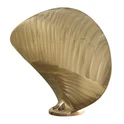
When it comes to the maritime industry, the performance of a ship propeller is of utmost importance. As a ship propeller supplier, I have witnessed firsthand how various factors can significantly impact the efficiency, reliability, and overall performance of these crucial components. In this blog post, I will delve into the key factors that affect the performance of a ship propeller, providing insights based on my years of experience in the industry.
Design and Geometry
The design and geometry of a ship propeller play a fundamental role in determining its performance. The shape, size, and number of blades, as well as the pitch and diameter, all influence how the propeller interacts with the water. For instance, a propeller with a larger diameter can generate more thrust, but it may also require more power to turn. On the other hand, a propeller with a higher pitch can provide greater speed, but it may be less efficient at lower speeds.
The shape of the blades is also crucial. A well-designed blade shape can reduce drag and increase lift, resulting in improved efficiency. For example, a blade with a curved or twisted shape can better match the flow of water around the propeller, reducing turbulence and improving performance. Additionally, the number of blades can affect the propeller's performance. A propeller with more blades can provide smoother operation and less vibration, but it may also be more expensive to manufacture.
At our company, we offer a wide range of propellers with different designs and geometries to meet the specific needs of our customers. Our Yuan Ding NAB-3000 Propeller is designed with advanced blade shapes and optimized pitch and diameter to provide high efficiency and performance. It is suitable for a variety of vessels, including cruise ships and ferries.
Material and Manufacturing Quality
The material used to manufacture a ship propeller and the quality of the manufacturing process can also have a significant impact on its performance. Propellers are typically made from materials such as bronze, stainless steel, or composite materials. Each material has its own advantages and disadvantages in terms of strength, durability, corrosion resistance, and cost.
Bronze is a popular choice for ship propellers due to its high strength, good corrosion resistance, and relatively low cost. Stainless steel is another option, offering excellent corrosion resistance and high strength. Composite materials are becoming increasingly popular due to their lightweight and high strength-to-weight ratio. However, they may be more expensive and require specialized manufacturing processes.
In addition to the material, the quality of the manufacturing process is also crucial. A well-manufactured propeller will have precise dimensions, smooth surfaces, and uniform blade thickness. Any defects or irregularities in the propeller can lead to reduced performance, increased vibration, and premature wear. At our company, we use state-of-the-art manufacturing techniques and strict quality control measures to ensure that our propellers meet the highest standards of quality and performance. Our Stone-Throwing Ship Propeller is made from high-quality bronze and is precision-machined to ensure optimal performance.
Operating Conditions
The operating conditions in which a ship propeller operates can also affect its performance. Factors such as water temperature, salinity, and density can all influence the propeller's efficiency and thrust. For example, in colder water, the density of the water is higher, which can increase the resistance on the propeller and reduce its efficiency. Similarly, in saltwater, the higher salinity can increase the corrosion rate of the propeller, requiring more frequent maintenance.
The speed and load of the vessel also play a role in the propeller's performance. A propeller that is designed for a specific speed and load may not perform optimally if the vessel operates at a different speed or load. For example, if a propeller is designed for a high-speed vessel and the vessel operates at a lower speed, the propeller may not generate enough thrust, resulting in reduced performance.
At our company, we work closely with our customers to understand their operating conditions and recommend the most suitable propeller for their needs. Our Minesweeper Propeller is designed to operate in harsh environments and is suitable for vessels that require high thrust and maneuverability.
Maintenance and Inspection
Regular maintenance and inspection of a ship propeller are essential to ensure its optimal performance and longevity. Over time, propellers can become damaged or worn due to factors such as corrosion, cavitation, and impact. Cavitation is a phenomenon that occurs when the pressure around the propeller blades drops below the vapor pressure of the water, causing bubbles to form and collapse. This can lead to pitting and erosion of the blade surfaces, reducing the propeller's efficiency and performance.
To prevent cavitation and other forms of damage, it is important to inspect the propeller regularly for signs of wear and damage. Any damage should be repaired or replaced as soon as possible to prevent further damage and ensure the safety of the vessel. Additionally, proper lubrication and cleaning of the propeller can help to reduce friction and wear, improving its performance and longevity.


At our company, we offer comprehensive maintenance and inspection services for our propellers. Our team of experienced technicians can perform detailed inspections and repairs to ensure that your propeller is in optimal condition. We also provide training and support to our customers on how to properly maintain and care for their propellers.
Conclusion
In conclusion, the performance of a ship propeller is affected by a variety of factors, including design and geometry, material and manufacturing quality, operating conditions, and maintenance and inspection. As a ship propeller supplier, we understand the importance of these factors and strive to provide our customers with high-quality propellers that meet their specific needs.
If you are in the market for a new ship propeller or need maintenance and inspection services for your existing propeller, please contact us. Our team of experts can provide you with personalized advice and recommendations based on your specific requirements. We look forward to working with you to ensure the optimal performance and reliability of your vessel.
References
- Carlton, J. S. (2007). Marine Propellers and Propulsion. Butterworth-Heinemann.
- Kerwin, J. E. (1986). Hydrodynamics of Ship Propellers. Cambridge University Press.
- Schneekluth, H., & Bertram, V. (1998). Ship Design for Efficiency and Economy. Butterworth-Heinemann.