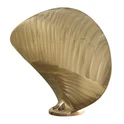
The diameter of a ship propeller is a crucial parameter that significantly impacts a vessel's performance, efficiency, and overall operation. As a reputable ship propeller supplier, we understand the importance of getting this dimension right to ensure optimal functionality for various types of ships. In this blog, we'll delve into the factors that determine the diameter of a ship propeller, explore different ship types and their typical propeller diameters, and highlight how our expertise can meet your specific propeller needs.
Factors Influencing Ship Propeller Diameter
Ship Size and Type
One of the primary factors affecting the propeller diameter is the size and type of the ship. Larger vessels generally require larger propellers to generate sufficient thrust. For instance, a massive container ship or an oil tanker needs a propeller with a large diameter to move its substantial weight through the water. On the other hand, smaller boats such as fishing vessels or pleasure crafts can operate with relatively smaller propellers.
Cruise ships, known for their luxury and capacity to carry thousands of passengers, also demand large - diameter propellers. These propellers need to provide enough power to move the ship smoothly and efficiently, ensuring a comfortable journey for passengers. You can learn more about cruise ship propellers underwater by visiting Cruise Ship Propeller Underwater.
Engine Power
The power of the ship's engine is another critical factor. A high - powered engine can drive a larger propeller. If the engine has a significant amount of horsepower, it can turn a bigger propeller, which in turn can generate more thrust. However, there must be a proper match between the engine power and the propeller diameter. An oversized propeller for a given engine may cause the engine to work too hard and lead to inefficiencies or even damage. Conversely, an undersized propeller may not fully utilize the engine's power, resulting in sub - optimal performance.
Speed Requirements
The desired speed of the ship also plays a role in determining the propeller diameter. Ships designed for high - speed operations often have smaller - diameter, high - pitched propellers. These propellers can rotate at higher speeds, allowing the ship to achieve greater velocities. In contrast, ships that operate at lower speeds, such as some cargo vessels, may have larger - diameter propellers. These propellers can generate more thrust at lower rotational speeds, which is more suitable for their operational requirements.
Hull Design
The design of the ship's hull affects the flow of water around the propeller. A well - designed hull can direct water more efficiently towards the propeller, enhancing its performance. Some hull designs may require specific propeller diameters to optimize the interaction between the hull and the propeller. For example, ships with a fine - shaped hull may benefit from a different propeller diameter compared to those with a broader, fuller hull.
Typical Propeller Diameters for Different Ship Types
Cruise Ships
Cruise ships are large and heavy, and they need powerful propellers to move them through the water. The propeller diameter of a modern cruise ship can range from 5 to 8 meters or even larger in some cases. These large - diameter propellers are designed to provide smooth and efficient propulsion, minimizing vibrations and noise for the comfort of passengers. The large size allows them to generate enough thrust to move the massive ship at a reasonable speed while maintaining fuel efficiency.
Container Ships
Container ships are workhorses of the shipping industry, transporting large quantities of goods across the oceans. The propeller diameter of container ships can vary depending on their size. Smaller container ships may have propellers with diameters around 4 - 5 meters, while larger ones can have propellers up to 7 meters or more. These propellers need to be able to handle the high - volume cargo and maintain a consistent speed during long - distance voyages.
Fishing Vessels
Fishing vessels come in various sizes, from small inshore boats to large deep - sea trawlers. Small fishing boats may have propellers with diameters as small as 1 - 2 meters. These propellers are sufficient to power the boat in shallow waters and for short - range operations. Larger deep - sea fishing vessels, on the other hand, may have propellers with diameters ranging from 2 - 4 meters, depending on their size and engine power.
Integrated Maritime Supervisory Vessels
Integrated maritime supervisory vessels are used for various tasks such as patrolling, surveillance, and search - and - rescue operations. These vessels require propellers that can provide both speed and maneuverability. The propeller diameter of these vessels typically ranges from 3 to 6 meters. You can find more information about integrated maritime supervisory vessel propellers on Integrated Maritime Supervisory Vessel Propeller.


Marine Screw Propellers
Marine screw propellers are widely used in different types of ships. The diameter of marine screw propellers can vary greatly depending on the application. For small boats, the diameter may be less than 1 meter, while for large ocean - going vessels, it can be several meters. The design of marine screw propellers is optimized to convert the rotational energy of the engine into thrust efficiently. To learn more about marine screw propellers, visit Marine Screw Propeller.
Our Expertise as a Ship Propeller Supplier
As a ship propeller supplier, we have extensive experience in designing and manufacturing propellers of various diameters. Our team of engineers and experts understands the complex relationship between the different factors that influence propeller diameter and can provide customized solutions for your specific ship.
We use advanced technology and high - quality materials in our propeller manufacturing process. Our propellers are designed to meet the highest standards of performance, durability, and efficiency. Whether you need a propeller for a small fishing boat or a large cruise ship, we can offer the right solution.
We also provide comprehensive after - sales service. Our team of technicians can assist with installation, maintenance, and repair of the propellers. We understand that a well - maintained propeller is essential for the smooth operation of your ship, and we are committed to ensuring that your propeller performs at its best throughout its lifespan.
Contact Us for Your Propeller Needs
If you are in the market for a ship propeller, we invite you to contact us for a consultation. Our experts can help you determine the appropriate propeller diameter for your ship based on its size, engine power, speed requirements, and other factors. We can also provide detailed information about our products, pricing, and delivery options.
We are dedicated to providing the best possible solutions for our customers. Whether you are a shipowner, a shipbuilder, or a shipping company, we can meet your propeller needs. Let us help you optimize the performance of your ship with our high - quality propellers.
References
- "Principles of Naval Architecture" by the Society of Naval Architects and Marine Engineers.
- "Ship Propulsion and Resistance" by David G. F. Carley.
- Industry reports and research on ship propulsion systems.