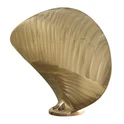
Balancing tugboat propellers is a critical process that directly impacts the performance, efficiency, and longevity of these essential marine components. As a trusted supplier of tugboat propellers, I understand the significance of proper propeller balancing and its far - reaching implications for the maritime industry. In this blog, I will delve into the details of how tugboat propellers are balanced, the importance of this process, and the advanced techniques we employ to ensure the highest quality products.
Why Propeller Balancing Matters
Before we explore the balancing process, it's crucial to understand why it is so important. A well - balanced tugboat propeller offers several key benefits. Firstly, it reduces vibration. Excessive vibration can cause discomfort for the crew, damage to the tugboat's structure and machinery, and even lead to premature wear and tear of the propeller itself. By minimizing vibration, a balanced propeller enhances the overall safety and reliability of the vessel.
Secondly, proper balancing improves fuel efficiency. An unbalanced propeller can create uneven forces in the water, which means the engine has to work harder to achieve the desired speed. This results in increased fuel consumption and higher operating costs. A balanced propeller, on the other hand, operates more smoothly, allowing the engine to function more efficiently and saving on fuel expenses.
Finally, balanced propellers contribute to a longer service life. The reduced stress and wear on the propeller and other related components mean that they are less likely to fail prematurely. This translates into fewer maintenance requirements and lower replacement costs over the long term.
The Basics of Propeller Imbalance
Propeller imbalance can occur due to various reasons. Manufacturing tolerances can lead to slight variations in the weight and shape of the propeller blades. During operation, the propeller may also experience damage, such as chips or dents, which can disrupt its balance. Additionally, the accumulation of marine growth on the blades can cause an imbalance.
There are two main types of imbalance: static imbalance and dynamic imbalance. Static imbalance occurs when the center of gravity of the propeller does not coincide with its axis of rotation. This can cause the propeller to "hang" unevenly when suspended, and it results in a single - plane force acting on the propeller shaft. Dynamic imbalance, on the other hand, is more complex. It involves forces acting in multiple planes and is caused by both the distribution of mass along the length of the blades and the orientation of the blades relative to each other.
Balancing Techniques
Static Balancing
Static balancing is the first step in the propeller balancing process. It is a relatively simple but essential procedure that helps to identify and correct static imbalances. To perform static balancing, the propeller is mounted on a horizontal shaft supported by low - friction bearings. The propeller is then allowed to come to rest. If the propeller is not balanced, the heavier side will rotate downwards.
To correct the static imbalance, weights can be added or removed from the propeller. In some cases, material can be removed from the heavier side of the blade using machining techniques. Alternatively, small weights can be attached to the lighter side of the blade. This process is repeated until the propeller remains in any position when placed on the balancing shaft, indicating that it is statically balanced.
Dynamic Balancing
Dynamic balancing is a more sophisticated process that addresses both static and dynamic imbalances. It is typically performed using specialized balancing equipment. The propeller is mounted on a test stand, and sensors are attached to measure the vibrations and forces generated during rotation.


The balancing equipment analyzes the data from the sensors and determines the magnitude and location of the imbalance. Based on this information, weights are added or removed from the propeller to correct the imbalance. This process is often iterative, with multiple test runs and adjustments being made until the vibration levels are within acceptable limits.
At our company, we use state - of - the - art dynamic balancing machines that can accurately measure and correct imbalances to extremely high tolerances. Our technicians are highly trained and experienced in operating these machines, ensuring that each propeller we supply is perfectly balanced.
Advanced Technologies in Propeller Balancing
In recent years, there have been significant advancements in propeller balancing technologies. One such advancement is the use of computer - aided design (CAD) and finite element analysis (FEA) software. These tools allow us to model the propeller's behavior during operation and predict potential imbalances before the propeller is even manufactured.
By analyzing the design and material properties of the propeller in a virtual environment, we can make adjustments to optimize its balance. This not only improves the quality of the final product but also reduces the time and cost associated with the balancing process.
Another emerging technology is the use of real - time monitoring systems. These systems can be installed on the tugboat to continuously monitor the balance of the propeller during operation. If an imbalance is detected, the system can alert the crew, allowing them to take corrective action before any serious damage occurs.
Our Commitment to Quality
As a leading supplier of tugboat propellers, we are committed to providing our customers with the highest quality products. Our propellers, such as the Tug Boat Prop, Turbot Fishing Vessel Propeller, and Fully Revolving Tugboat Propeller, undergo a rigorous balancing process to ensure optimal performance.
We use only the finest materials and the latest manufacturing techniques to produce our propellers. Our quality control team conducts thorough inspections at every stage of the production process, from raw material selection to final assembly. This ensures that each propeller meets or exceeds industry standards.
Contact Us for Your Propeller Needs
If you are in the market for high - quality, balanced tugboat propellers, look no further. Our team of experts is ready to assist you in selecting the right propeller for your specific requirements. Whether you need a replacement propeller or are building a new tugboat, we have the expertise and the products to meet your needs.
Contact us today to discuss your propeller requirements and to learn more about our products and services. Let us help you enhance the performance and efficiency of your tugboat with our perfectly balanced propellers.
References
- "Marine Propellers and Propulsion" by John Carlton. This comprehensive book provides in - depth knowledge about marine propellers, including the principles of balancing.
- Industry standards and guidelines from organizations such as the International Maritime Organization (IMO) and the American Bureau of Shipping (ABS), which offer valuable information on propeller design, manufacturing, and balancing requirements.