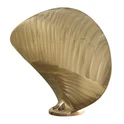
A high - performance ferry boat propeller is crucial for the efficient and reliable operation of ferry services. As a ferry boat propeller supplier, I have in - depth knowledge of the characteristics that make a propeller stand out in the market. In this blog, I will explore the key features of a high - performance ferry boat propeller.
1. Hydrodynamic Efficiency
One of the most important characteristics of a high - performance ferry boat propeller is its hydrodynamic efficiency. A well - designed propeller should be able to convert the engine's power into thrust with minimal energy loss. This is achieved through careful shaping of the propeller blades.
The blade profile plays a vital role in hydrodynamic efficiency. Modern propellers often feature airfoil - shaped blades. The airfoil shape is designed to generate lift in a fluid (in this case, water), similar to how an airplane wing generates lift in air. This lift force is then translated into forward thrust for the ferry boat. By optimizing the airfoil shape, the propeller can reduce drag and increase the amount of thrust produced per unit of power input.
Another aspect of hydrodynamic efficiency is the pitch of the propeller. Pitch refers to the distance a propeller would move forward in one complete rotation if it were moving through a solid medium. A propeller with the right pitch for the ferry's speed and engine power can operate at its peak efficiency. For example, a ferry that operates at high speeds may require a propeller with a higher pitch, while a ferry that needs to maneuver in tight spaces may benefit from a lower - pitch propeller.
2. Material and Durability
The materials used in manufacturing a ferry boat propeller are essential for its performance and longevity. High - performance propellers are typically made from high - strength materials such as stainless steel, bronze, or nickel - aluminum - bronze.
Stainless steel propellers are known for their corrosion resistance. They can withstand the harsh marine environment, including saltwater, which is highly corrosive. This makes them a good choice for ferries that operate in coastal areas or in saltwater bodies. Stainless steel also has good strength - to - weight ratio, which means the propeller can be relatively lightweight while still being able to handle the stresses of operation.
Bronze and nickel - aluminum - bronze are also popular choices. These materials offer excellent resistance to cavitation. Cavitation occurs when the pressure around the propeller blades drops below the vapor pressure of water, causing the formation of vapor bubbles. When these bubbles collapse, they can cause significant damage to the propeller blades over time. Bronze and nickel - aluminum - bronze are more resistant to the erosive effects of cavitation compared to some other materials, ensuring the propeller's durability.
3. Noise and Vibration Reduction
A high - performance ferry boat propeller should also be designed to minimize noise and vibration. Excessive noise and vibration can not only be uncomfortable for passengers and crew but can also lead to structural damage to the ferry over time.
Propeller design features such as blade number, blade shape, and blade thickness can all affect noise and vibration levels. For example, a propeller with a greater number of blades may produce less noise and vibration compared to a propeller with fewer blades. This is because the load is distributed more evenly among the blades, reducing the likelihood of large pressure fluctuations that can cause noise and vibration.
Advanced manufacturing techniques can also help in reducing noise and vibration. Precision machining ensures that the propeller blades are perfectly balanced. An unbalanced propeller can cause significant vibration, which can be detrimental to the ferry's performance and the comfort of those on board.
4. Maneuverability
Ferries often need to navigate in various conditions, including narrow channels, busy ports, and areas with heavy traffic. A high - performance propeller should contribute to the ferry's maneuverability.
Some ferry boat propellers are designed with features that allow for better steering control. For example, twin - screw propellers, where two propellers are installed on either side of the ferry, can provide enhanced maneuverability. By varying the thrust of each propeller, the ferry can turn more sharply and navigate tight spaces more easily.
In addition, some propellers are designed to be adjustable. Adjustable - pitch propellers allow the pitch of the blades to be changed while the ferry is in operation. This means that the ferry can optimize its performance depending on the operating conditions. For example, when the ferry needs to slow down or stop, the pitch can be reduced, and when it needs to speed up, the pitch can be increased.


5. Compatibility with Ferry Design
A high - performance propeller must be compatible with the overall design of the ferry. This includes factors such as the ferry's hull shape, engine power, and intended speed.
The hull shape of the ferry can affect the flow of water around the propeller. A propeller that is designed to work with a specific hull shape can take advantage of the water flow patterns created by the hull to increase its efficiency. For example, a ferry with a flat - bottomed hull may require a different propeller design compared to a ferry with a V - shaped hull.
The engine power of the ferry is also a crucial factor. The propeller must be able to handle the power output of the engine. If the propeller is too small or has the wrong pitch for the engine power, it may not be able to convert the engine's power into effective thrust. On the other hand, if the propeller is too large, it can put excessive strain on the engine, leading to reduced efficiency and potential damage.
Our Product Offerings
As a ferry boat propeller supplier, we offer a wide range of high - performance propellers to meet the diverse needs of ferry operators. Our 5 M Propeller for Ferry Boat is designed for larger ferries that require high thrust and efficiency. It is made from high - quality materials and features an optimized blade design for maximum hydrodynamic performance.
Our Ftandem Propeller is a unique design that offers enhanced maneuverability. It is suitable for ferries that need to operate in congested areas or in areas with complex waterways.
For ferries that operate in the open ocean, our Ocean - Going Ship Propeller is an excellent choice. It is built to withstand the harsh conditions of the open sea and is designed for high - speed operation.
Contact Us for Procurement
If you are a ferry operator or are involved in the procurement of ferry boat propellers, we would love to discuss your specific needs. Our team of experts can help you select the right propeller for your ferry, taking into account all the factors mentioned above. Whether you need a propeller for a new ferry or a replacement propeller for an existing one, we have the products and knowledge to assist you. Please reach out to us to start the procurement discussion.
References
- Carlton, J. S. (2007). Marine Propellers and Propulsion. Butterworth - Heinemann.
- Breslin, J. P., & Andersen, P. (1996). Hydrodynamics of Ship Propellers. Cambridge University Press.
- Lewis, E. V. (Ed.). (1988). Principles of Naval Architecture. Society of Naval Architects and Marine Engineers.