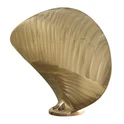
Hey there! As a supplier of navy ship propellers, I've got a ton of knowledge about the different types out there. In this blog, I'm gonna walk you through the various kinds of navy ship propellers, their features, and where they shine.
Fixed - Pitch Propellers
Fixed - pitch propellers are the most common type you'll find in navy ships. The pitch of these propellers, which is the distance the propeller would move forward in one rotation if there were no slip, is set during the manufacturing process and can't be changed.
One of the big advantages of fixed - pitch propellers is their simplicity. They're relatively easy to design, build, and maintain. Since there are no moving parts to adjust the pitch, there's less that can go wrong. This makes them a reliable choice for many navy applications.
For example, in smaller navy vessels like patrol boats, fixed - pitch propellers work great. These boats often have a consistent operating speed and don't need the flexibility of variable - pitch propellers. They can be designed to optimize performance at a specific speed, which is ideal for patrol duties where the boat might be cruising at a set pace for long periods.


If you're interested in a specific type of fixed - pitch propeller for a navy ship, check out our Panama - Type Bulk Carrier Propeller. It's designed to handle the demands of large - scale navy operations with efficiency.
Variable - Pitch Propellers
Variable - pitch propellers, on the other hand, offer a lot more flexibility. The pitch of these propellers can be adjusted while the ship is in operation. This means that the ship can adapt to different operating conditions, such as changes in speed, load, or sea state.
When a navy ship needs to accelerate quickly, the pitch can be decreased to reduce the load on the engine and allow for faster rotation. Conversely, when the ship needs to operate at a slow speed or maintain a steady position, the pitch can be increased to provide more thrust.
This type of propeller is commonly used in larger navy vessels like aircraft carriers and amphibious assault ships. These ships have a wide range of operating requirements, from high - speed transits to slow - speed maneuvers during docking or launching aircraft. The ability to adjust the pitch gives them better control and performance in various situations.
Controllable - Pitch Propellers (CPP)
Controllable - pitch propellers are a subtype of variable - pitch propellers. They use a hydraulic or electric system to adjust the pitch of the propeller blades. The control system can be operated manually from the ship's bridge or automatically based on pre - set parameters.
One of the benefits of CPPs is their fuel efficiency. By adjusting the pitch to match the operating conditions, the engine can operate at its most efficient point, saving fuel and reducing emissions. This is a big deal for navy ships, which often have long - range missions and need to conserve resources.
Another advantage is the improved maneuverability. CPPs allow for precise control of the ship's speed and direction, which is crucial in combat situations or when navigating in tight spaces.
Ducted Propellers
Ducted propellers have a shroud or duct around the propeller blades. This duct can improve the efficiency of the propeller by increasing the mass flow of water through the propeller and reducing the tip losses.
In navy applications, ducted propellers are often used in ships that require high thrust at low speeds, such as tugboats and some types of mine - countermeasure vessels. The duct helps to direct the flow of water and provides more thrust, which is useful for tasks like towing other ships or maneuvering in confined areas.
Outboard Propellers
Outboard propellers are commonly used on smaller navy boats and tenders. These propellers are attached to outboard motors, which are self - contained units that include the engine, gearbox, and propeller.
They're easy to install and remove, which makes them convenient for maintenance and replacement. Outboard propellers come in different sizes and pitches to suit different boat sizes and operating requirements.
If you're in the market for used outboard propellers for your navy vessels, we've got you covered. Check out our Used outboard propellers section for some great options.
Second - Hand Marine Propellers
Second - hand marine propellers can be a cost - effective solution for navy ships, especially for smaller vessels or those with a limited budget. These propellers have been previously used but are still in good working condition.
When buying second - hand propellers, it's important to have them inspected by a professional to ensure they're safe and suitable for your ship. We carefully inspect all our Second Hand Marine Propeller offerings to make sure they meet high standards.
Multi - Blade Propellers
Multi - blade propellers have more than the standard three or four blades. They can provide several advantages, such as reduced vibration and noise. This is important for navy ships, especially those involved in stealth operations where noise reduction is crucial.
Multi - blade propellers also tend to have better performance at high speeds and can handle higher loads. They're often used in high - performance navy vessels like destroyers and frigates.
Skewed Propellers
Skewed propellers have blades that are angled or curved in a non - traditional way. This design helps to reduce the pressure fluctuations on the propeller blades, which in turn reduces the noise and vibration generated by the propeller.
In navy applications, skewed propellers are used in submarines and other stealthy vessels. By reducing the noise signature, these propellers make it harder for the enemy to detect the ship using sonar.
Selecting the Right Propeller
Choosing the right propeller for a navy ship depends on several factors. The size and type of the ship are obviously important. Larger ships with more complex operating requirements will need more advanced propellers, like variable - pitch or controllable - pitch propellers.
The ship's mission profile also plays a big role. If the ship is mainly used for high - speed transits, a propeller designed for high - speed performance would be a good choice. On the other hand, if the ship needs to operate at slow speeds or perform delicate maneuvers, a propeller with better low - speed thrust and maneuverability would be more suitable.
Cost is another consideration. While more advanced propellers may offer better performance, they can also be more expensive. Second - hand or fixed - pitch propellers can be a more budget - friendly option for some navy applications.
Why Choose Us as Your Supplier
As a supplier of navy ship propellers, we've got a wide range of options to meet your needs. We understand the unique requirements of navy ships and can help you select the right propeller for your vessel.
Our propellers are made from high - quality materials and are built to last. We have a team of experts who can provide technical support and advice, whether you're looking for a new propeller or need help with maintenance.
If you're interested in learning more about our navy ship propellers or have any questions, don't hesitate to reach out. We're here to help you find the perfect propeller solution for your navy fleet. Whether you're in charge of a small patrol boat or a large aircraft carrier, we've got the expertise and products to keep your ships running smoothly.
So, if you're ready to take the next step in equipping your navy ships with top - notch propellers, let's start a conversation. Contact us today to discuss your requirements and get a quote. We're looking forward to working with you to enhance the performance of your navy vessels.
References
- "Marine Propellers and Propulsion" by John Carlton
- "Principles of Naval Architecture" by David C. Gilfillan