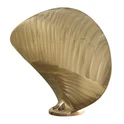
Hey there! I'm a supplier of marine screw propellers, and today I wanna chat about the torque requirement for a marine screw propeller. It's a topic that's super important for anyone in the marine industry, whether you're a shipbuilder, a ship operator, or just someone interested in how these things work.
First off, let's understand what torque is. Torque is basically a measure of the force that can cause an object to rotate around an axis. In the case of a marine screw propeller, the engine generates torque, which is then transferred to the propeller shaft. This torque makes the propeller spin, and as it spins, it pushes water backwards, creating a forward thrust that moves the ship.
The torque requirement for a marine screw propeller depends on several factors. One of the most important factors is the size of the propeller. Generally speaking, larger propellers require more torque to turn. This is because they have a larger surface area and more mass, which means they need more force to get them spinning and keep them spinning at the right speed. For example, a 3 Meter Cruise Ship Propeller will need a lot more torque than a smaller propeller used on a fishing boat.
Another factor that affects the torque requirement is the pitch of the propeller. The pitch is the distance that the propeller would move forward in one revolution if it were moving through a solid medium. A propeller with a high pitch will require more torque to turn because it has to push more water backwards with each revolution. On the other hand, a propeller with a low pitch will require less torque, but it may not generate as much thrust.
The speed at which the ship is intended to travel also plays a role in determining the torque requirement. If a ship needs to travel at high speeds, the propeller will need to spin faster, which means it will require more torque. This is because the faster the propeller spins, the more force it needs to overcome the resistance of the water. For instance, a high - speed yacht will need a propeller that can handle a significant amount of torque to achieve its desired speed.
The type of ship and its intended use are also crucial. A Mine Hunting Sweeper Propeller has different requirements compared to a cargo ship. Mine hunting sweepers often need to be very maneuverable and may require propellers that can quickly change their pitch and speed. This means the torque requirements may vary depending on the specific maneuvers the ship needs to perform. Cargo ships, on the other hand, are usually designed for long - distance travel at a relatively constant speed, so their propellers are optimized for efficiency and may have different torque requirements.
The efficiency of the propeller design is another aspect. A well - designed propeller can convert the torque from the engine into thrust more effectively. This means that for the same amount of torque, a more efficient propeller can generate more thrust. Propeller designers use advanced computer simulations and hydrodynamic models to optimize the shape, blade profile, and other features of the propeller to improve its efficiency.
Now, let's talk about how we, as a marine screw propeller supplier, deal with these torque requirements. When a customer comes to us, we first need to understand their specific needs. We ask them about the size of the ship, its intended speed, and the type of operation it will be used for. Based on this information, we can recommend the right propeller with the appropriate torque capacity.
We use high - quality materials and advanced manufacturing techniques to ensure that our propellers can handle the required torque. For example, we may use special alloys that are strong and durable, which can withstand the high stresses generated by the torque. Our manufacturing process is also carefully controlled to ensure that the propellers are balanced correctly. An unbalanced propeller can cause vibrations, which not only reduce the efficiency of the propeller but can also damage the ship's engine and other components.
We also offer propellers with different pitch options. This allows our customers to choose the pitch that best suits their needs. If they need more speed, they can opt for a higher - pitch propeller, but they need to make sure their engine can provide the necessary torque. If they prioritize fuel efficiency or lower torque requirements, a lower - pitch propeller may be a better choice.
In addition to providing the right propellers, we also offer technical support. We can help our customers calculate the torque requirements accurately and advise them on any modifications or upgrades they may need to their engines or propulsion systems. Our goal is to make sure that our customers get the most out of their propellers and that their ships operate smoothly and efficiently.


If you're in the market for a Ship Propeller, whether you're building a new ship or replacing an old propeller, we'd love to hear from you. Understanding the torque requirements is just one part of the equation, but it's a crucial part. By working with us, you can be confident that you're getting a high - quality propeller that's tailored to your specific needs. So, don't hesitate to reach out and start a conversation with us about your propeller requirements. We're here to help you find the perfect solution for your marine propulsion needs.
References
- "Marine Propellers and Propulsion" by M. J. Atlar and A. J. Day
- "Principles of Naval Architecture" by the Society of Naval Architects and Marine Engineers