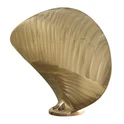
Cavitation is a phenomenon that has long intrigued marine engineers and operators alike, especially when it comes to container ship propellers. As a leading supplier of Container Ship Propellers, I've witnessed firsthand the impact of cavitation on the performance and longevity of these crucial marine components. In this blog, I'll delve into the intricacies of propeller cavitation, its effects, and how we, as a supplier, address this issue to provide the best solutions for our clients.


Understanding Cavitation
Cavitation occurs when the pressure of a liquid drops below its vapor pressure, causing the formation of vapor bubbles. In the context of a container ship propeller, as the propeller blades rotate through the water, they create areas of high and low pressure. When the pressure on the blade surface drops below the vapor pressure of the water, vapor bubbles form. These bubbles then collapse when they move into an area of higher pressure, creating a shockwave that can cause damage to the propeller surface.
There are several types of cavitation that can occur on a container ship propeller:
- Sheet Cavitation: This is the most common type of cavitation. It appears as a smooth, sheet-like layer of bubbles on the blade surface. Sheet cavitation usually occurs at the leading edge of the blade and can spread across the blade as the propeller speed increases. While sheet cavitation can reduce the efficiency of the propeller, it is generally less damaging than other types of cavitation.
- Cloud Cavitation: Cloud cavitation is characterized by the formation and collapse of large clouds of bubbles. These clouds can cause significant damage to the propeller blades due to the high-energy shockwaves generated when the bubbles collapse. Cloud cavitation often occurs at higher propeller speeds and can lead to pitting and erosion of the blade surface.
- Tip Vortex Cavitation: This type of cavitation occurs at the tip of the propeller blade. As the propeller rotates, a vortex is formed at the blade tip, and if the pressure in this vortex drops below the vapor pressure of the water, cavitation bubbles are formed. Tip vortex cavitation can reduce the efficiency of the propeller and also cause noise and vibration.
- Hub Vortex Cavitation: Similar to tip vortex cavitation, hub vortex cavitation occurs at the hub of the propeller. The hub vortex can cause cavitation bubbles to form, which can lead to damage to the hub and surrounding components.
Effects of Cavitation on Container Ship Propellers
The effects of cavitation on container ship propellers can be significant and wide-ranging. Here are some of the key impacts:
- Reduced Efficiency: Cavitation disrupts the smooth flow of water around the propeller blades, which reduces the propeller's ability to convert rotational energy into thrust. This results in increased fuel consumption and reduced ship speed. For container ships, which operate on tight schedules and require high fuel efficiency, even a small reduction in propeller efficiency can have a significant impact on operating costs.
- Damage to Propeller Blades: The collapse of cavitation bubbles creates high-pressure shockwaves that can cause pitting, erosion, and even fatigue cracks in the propeller blades. Over time, this damage can weaken the blades and compromise their structural integrity, leading to costly repairs or replacement of the propeller.
- Noise and Vibration: Cavitation can generate significant noise and vibration, which can be a nuisance to the ship's crew and passengers. In addition, excessive vibration can also cause damage to other ship components, such as the propulsion system and the hull.
- Environmental Impact: The increased fuel consumption due to cavitation results in higher emissions of greenhouse gases and other pollutants. This is a growing concern in the shipping industry, which is under increasing pressure to reduce its environmental impact.
Preventing and Mitigating Cavitation
As a supplier of Container Ship Propellers, we take a proactive approach to preventing and mitigating cavitation. Here are some of the strategies we employ:
- Optimized Propeller Design: Our team of experienced marine engineers uses advanced computational fluid dynamics (CFD) software to design propellers that minimize the risk of cavitation. By carefully shaping the blade geometry and optimizing the pitch and diameter of the propeller, we can ensure that the pressure distribution on the blade surface remains within safe limits.
- High-Quality Materials: We use high-strength, corrosion-resistant materials for our propellers, such as stainless steel and nickel-aluminum bronze. These materials are more resistant to the damage caused by cavitation and can withstand the harsh marine environment.
- Surface Treatment: We apply special surface treatments to our propellers to improve their resistance to cavitation. These treatments can include coatings and hardening processes that create a protective layer on the blade surface, reducing the risk of pitting and erosion.
- Regular Maintenance and Inspection: We recommend regular maintenance and inspection of container ship propellers to detect and address cavitation damage early. This includes visual inspections, non-destructive testing, and measurement of propeller performance parameters. By identifying and repairing cavitation damage in a timely manner, we can prevent further damage and extend the lifespan of the propeller.
Our Product Range
At our company, we offer a wide range of Container Ship Propellers to meet the diverse needs of our clients. Our product portfolio includes Commercial Boat Propeller, Large Bulk Cargo Ship Propeller, and Corvette Propeller. Each of our propellers is designed and manufactured to the highest standards of quality and performance, using the latest technology and materials.
Contact Us for Propeller Solutions
If you're in the market for a high-quality container ship propeller that is resistant to cavitation, look no further. Our team of experts is ready to assist you in selecting the right propeller for your specific needs. Whether you're a shipowner, operator, or shipyard, we can provide you with customized solutions that will improve the efficiency and reliability of your vessel.
Contact us today to start a conversation about your propeller requirements. We look forward to working with you to find the best solution for your container ship.
References
- Carlton, J. S. (2007). Marine Propellers and Propulsion. Butterworth-Heinemann.
- Kerwin, J. E., & Park, Y. H. (2002). Cavitation in Marine Propulsion. Annual Review of Fluid Mechanics, 34(1), 495-527.
- Molland, A. F., Turnock, S. R., & Hudson, D. A. (2011). Ship Hydrodynamics. Cambridge University Press.