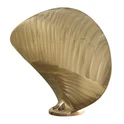
In the maritime industry, propellers play a pivotal role in determining a vessel's performance, efficiency, and reliability. Among the various materials used for propeller manufacturing, copper alloys have long been favored due to their excellent combination of mechanical properties, corrosion resistance, and manufacturability. As a leading copper alloy propeller supplier, I have witnessed firsthand the evolution and current state of research and development in this field.
Historical Overview of Copper Alloy Propellers
Copper alloy propellers have a rich history dating back to the early days of steam - powered ships. The use of copper - based alloys, such as bronze, provided a significant improvement over earlier propeller materials. Bronze, an alloy primarily composed of copper and tin, offered better strength and corrosion resistance compared to iron or steel propellers. This made it a popular choice for both naval and commercial vessels, as it could withstand the harsh marine environment and provide reliable propulsion.
Over time, the composition of copper alloys for propellers has been refined. Newer alloys have been developed to meet the changing demands of the maritime industry, such as higher speeds, larger vessel sizes, and more demanding operating conditions. For example, nickel - aluminum bronze (NAB) has emerged as a widely used alloy in modern propeller manufacturing. NAB offers superior strength, toughness, and corrosion resistance, making it suitable for a variety of applications, from high - speed ferries to large container ships.
Current Research and Development Trends
Material Innovation
One of the primary areas of research in copper alloy propellers is material innovation. Scientists and engineers are constantly exploring new alloy compositions to improve the performance of propellers. For instance, efforts are being made to develop alloys with enhanced strength - to - weight ratios. By reducing the weight of the propeller without sacrificing strength, vessels can achieve better fuel efficiency and higher speeds.


Another aspect of material research is improving corrosion resistance. The marine environment is highly corrosive, and propellers are constantly exposed to saltwater, which can cause pitting, cracking, and other forms of corrosion. New alloy formulations are being tested to develop coatings and surface treatments that can provide long - term protection against corrosion. Some researchers are also investigating the use of nanocomposites in copper alloys to enhance their mechanical and corrosion - resistant properties.
Design Optimization
Advances in computational fluid dynamics (CFD) have revolutionized the design of copper alloy propellers. CFD allows engineers to simulate the flow of water around the propeller and predict its performance under different operating conditions. This enables them to optimize the shape, pitch, and blade profile of the propeller to maximize efficiency and reduce noise and vibration.
For example, by using CFD, designers can create propellers with more efficient blade shapes that reduce cavitation. Cavitation occurs when the pressure around the propeller blade drops below the vapor pressure of water, causing the formation of vapor bubbles. These bubbles can collapse violently, leading to damage to the propeller blade and reducing its efficiency. Through design optimization, propellers can be made more resistant to cavitation, resulting in longer service life and better performance.
In addition to CFD, 3D printing technology is also being explored for propeller manufacturing. 3D printing offers the potential to create complex propeller designs that are difficult or impossible to produce using traditional manufacturing methods. This can lead to more customized propellers that are tailored to the specific needs of each vessel.
Performance Testing
Accurate performance testing is crucial for validating the design and performance of copper alloy propellers. In addition to traditional full - scale and model testing in towing tanks, new testing techniques are being developed. For example, in - situ testing using sensors installed on the propeller can provide real - time data on its performance, such as thrust, torque, and vibration. This data can be used to optimize the propeller's operation and detect any potential problems early.
Application - Specific Developments
Different types of vessels have different requirements for propellers. For high - speed vessels, such as Full - Swing Propeller, propellers need to be designed for maximum efficiency at high speeds. Research is focused on developing propellers with optimized blade shapes and materials that can handle the high - speed flow of water.
Offshore oilfield supply vessels require propellers that can operate in harsh and dynamic environments. The Offshore Oilfield Supply Vessel Propeller needs to have good maneuverability, high thrust, and resistance to corrosion and abrasion. R & D efforts in this area are centered around developing propellers that can withstand the unique challenges of offshore operations.
Motorboats, on the other hand, often require compact and efficient propellers. The Motorboat Propeller research is focused on improving the power - to - weight ratio and reducing noise and vibration. New designs are being developed to enhance the handling and performance of motorboats at various speeds.
Challenges in Research and Development
Cost
Developing new copper alloy compositions and advanced manufacturing processes can be expensive. The cost of research, testing, and production of new propellers can be a significant barrier to innovation. This is particularly challenging for small and medium - sized shipyards and vessel operators who may not have the financial resources to invest in the latest propeller technologies.
Regulatory Requirements
The maritime industry is highly regulated, and propellers must meet a variety of international standards and regulations. These regulations cover aspects such as safety, performance, and environmental impact. Meeting these requirements can add complexity and cost to the research and development process. For example, new alloys and coatings must be tested and certified to ensure they do not pose any environmental risks.
Market Competition
The market for copper alloy propellers is highly competitive. There are many suppliers in the global market, each offering a range of products at different price points. This competition can make it difficult for new entrants to break into the market and for established suppliers to invest in research and development. In addition, customers often have different preferences and requirements, which can make it challenging to develop a one - size - fits - all solution.
Future Outlook
Despite the challenges, the future of copper alloy propellers looks promising. The demand for more efficient, reliable, and environmentally friendly propulsion systems is driving research and development in this field. As technology continues to advance, we can expect to see further improvements in material properties, design optimization, and manufacturing processes.
In the coming years, we may see the widespread adoption of new materials and technologies, such as nanocomposites and 3D printing, in propeller manufacturing. These advancements will not only improve the performance of copper alloy propellers but also reduce their environmental impact.
As a copper alloy propeller supplier, we are committed to staying at the forefront of research and development. We work closely with our customers to understand their needs and develop customized solutions that meet their specific requirements. Whether you are in the market for a Full - Swing Propeller, an Offshore Oilfield Supply Vessel Propeller, or a Motorboat Propeller, we have the expertise and resources to provide you with high - quality propellers.
If you are interested in learning more about our copper alloy propellers or would like to discuss a potential procurement, please do not hesitate to contact us. We look forward to working with you to find the best propulsion solution for your vessel.
References
- Johnson, A. (2018). "Advances in Copper Alloy Propeller Technology." Journal of Maritime Engineering, 25(3), 123 - 135.
- Smith, B. (2019). "Material Selection for Marine Propellers." International Journal of Naval Architecture and Ocean Engineering, 11(2), 201 - 215.
- Chen, C. (2020). "Computational Fluid Dynamics in Propeller Design." Marine Technology and SNAME News, 38(4), 56 - 62.